
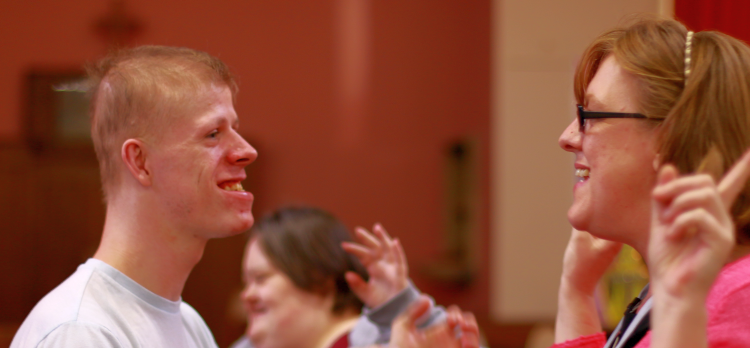
Judith Mbaabu tells how Hay Mills CC, supported by the Congregational Federation, is encouraging a fresh expression for adults with learning disabilities.
Hay Mills Congregational Church, Birmingham, closed down a couple of years ago but conversations about its future took a turn when we spoke to the manager of the neighbouring residential home for adults with learning disabilities.
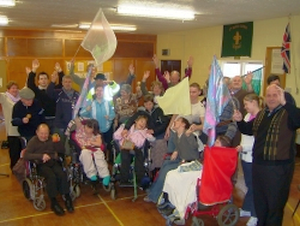
Many of the adults had loved coming to services and couldn't understand why the church had closed; they were disappointed and wanted to continue to meet together. Meeting the residents, it became quite clear that we needed to open it up in a different way and encourage a new form of church.
One of the many interesting things that came up as we started on this fresh expressions journey was the question, 'Why do you still need to use the church building?' We know about fresh expressions – going out and staying out, forming church where people are and possibly meeting in all sorts of places as a result.

The answer for us is that this particular building has significance for the people we serve. The residential home is where they live, their 'house'; they like to leave their 'house' and go next door into 'church'. There is something about their connection with that building and, for them, if we said, 'Let's have church in your house', it wouldn't have the same meaning. We have listened to what they've said about that and respect it.
The Congregational Federation's North West Midlands Area is giving its support and the local Ladypool Road Congregational Church is also playing a vital role; we couldn't do it without them. This initiative, which has been funded as a three-year project, is for all the activities associated with Hay Mills as a whole but the emphasis is on the fresh expression for our neighbours with learning disabilities. We are 'building' that alongside everything else we're doing – and planning to do – for people across the community.
Conversations continue about the name of the church. We've looked at all sorts of things like Community Church, Congregational community church, Community hub, Church hub. We are Church. We are Congregational. We are Community. How we behave is maybe more important than what we call ourselves but our name is the first thing many people hear about us, and their assumptions matter.

We asked our friends with learning disabilities because we are here to serve them, after all, and their views are very important. One lady wanted to call it, 'The church where we make friends'. For now, we have agreed on Hay Mills CC, and people can decide for themselves what CC stands for!
Stephane Vickers, who lives locally, is our Church Development Worker. He has been in post since the end of June 2015 and is working closely with the team of volunteers at Hay Mills.
One of Stephane's starting points was looking at our base as others see it, and opening it up as much as possible. During his early conversations with local people he found that many of them didn't know where Hay Mills Church was – even though they walked passed it regularly! The church is back from the main road and cars often park in front of it. If people cannot 'see' us, how are we likely to become a presence in the community? There are of course, a number of answers to that question, including going out to where people are and being a living presence through our actions, and working hard to let everyone know where we are through advertising, social media, networking and invitation. But it's also important to get the basics right so Stephane swung into action cutting back trees, power-washing the front, and sorting out the noticeboard.

Autumn is also going to be a busy time. At the moment, we run a monthly Messy Church for the adults with learning disabilities but a launch event for the whole church programme is scheduled for the end of October. We will hope to have a monthly café church and additional all-age Messy Church, for instance, but a lot will depend what people want to have there.
Currently we have a team of about eight, very dedicated, people who enable us to run the Messy Church for adults. Three of them come from Ladypool Road Congregational Church; others travel from Bristol, Gloucestershire, Wales and Nottingham. The Messy Church format remains pretty standard but we adapt it according to the needs of our friends with learning disabilities – between 15 and 20 of them. We have activities and refreshments on arrival with time to chat followed by worship songs, Bible input, and prayer (in a variety of forms), and then a main craft activity building on the worship.
We are now aware there are two other residential homes within the local area so Stephane is getting to know them and say they’d be welcome to join us in what we're doing. It really is a step-by-step process in building the community at Hay Mills CC, we are very much at the listening stage of the fresh expressions journey.

I read an article on Growing Mature Disciples on the Fresh Expressions website which gave good advice on the importance of being understanding with new believers, walking at their pace, and remembering how patient the Holy Spirit is with you and be patient with them. But how does it work if your companion has no spoken language? How does it work when your companion has a learning disability, and you have limited knowledge of how they understand the world around them?
To begin to address those questions, we are linking with Prospects – the Christian charity for people with learning disabilities – and they are going to come and do some training for us about the best way we can communicate with those who understand things in very different ways.
The Congregational Federation has funded this initiative for three years and part of Stephane's role is to raise money so that it can stand alone as a church in its own right. Sustainability is really important. It would then become a self-financing, independent church – as are all other Federation churches. The challenge is how to achieve sustainability, but we believe that if God has a plan for Hay Mills, then he will make it happen.
Another question centres on membership; how is that defined in the context of a non-traditional church? This is a question relevant to all of our churches that are moving forward and trying new ways of being church. If you have a Messy Church on a Wednesday afternoon, a café church on Friday evening and traditional church on Sunday morning, each with its own committed 'congregation', what is that people actually become members of?

Membership within all Congregational churches is about commitment to Christ, and commitment to the church, but we have to be prepared to think long and hard about what 'the church 'part of this looks like, and what exactly is it that people may want to become a part of. How do we establish membership with our community; what does it mean to them to belong? It's going to have to be a very different experience of membership. Traditionally the Church Meeting is where the decisions are made so, again, we are going to have to consider carefully what that means for us.
It's very important for us to have a clear plan, with short and long-term goals, and regularly review the work we are doing, revising our mission statement as needed. If you do not know what you are trying to achieve, how do you know if you are making any progress? For Hay Mills it means:
- reminding ourselves why we are there;
- checking that the plans we have meet the plan that Federation Council agreed to (and if not, why not);
- making sure we have events and activities planned that will allow the Kingdom to grow;
- enabling the community church hub to become a reality in the lives of people around;
- becoming a spiritual home for our friends with learning disabilities.
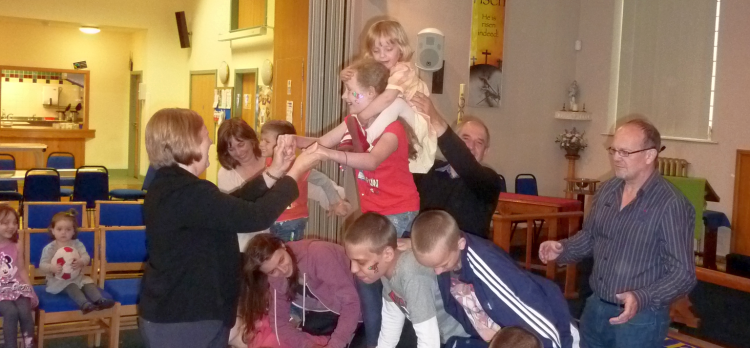


 The Ark opened its doors this month and we aim to help children and adults to talk about God and learn more of Bible stories by providing a safe space in which to explore matters of faith. We look to serve the local communities of Crawcrook and surrounding villages – as well as the wider Gateshead area.
 The playframe has been tailor made for The Ark because we managed to secure the rights to using drawings by popular illustrator and author Mick Inkpen. He's well-known for books like Kipper the Dog and Wibbly Pig but he has also produced many books based on the stories that Jesus told.
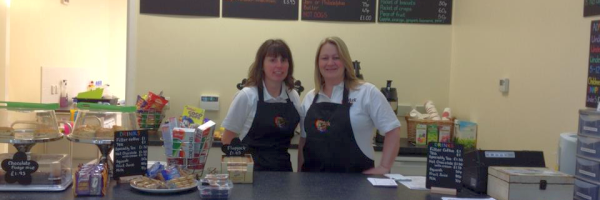
 Our church centre manager, in a full-time role, oversees the day-to-day running of the centre and takes the bookings for it but is also very much part of the vision. Janette is like a mission partner because she has to work with our partner organisations as well as supervise two part-time café supervisors. Volunteers help us to run the café and keep a watch on the play centre.
 Of course we have to cover our costs as well but we are working with the council in an effort to access money to subsidise places for the disabled-only sessions. Our business plan shows that the birthday parties are what pay for the building and the café. The idea is that we cover costs so we can be as flexible as we can.

 But Greg is now helping the Graceland congregation to see things differently, going outside the walls of their building to the people not reached by any church.
 This 'one-off' event has become a weekly gathering. Every Friday afternoon, a small group of people, some of whom first met at the original event, get together for church. They meet on Friday, because they (like 30% of people in the US) work on Sundays.
 When Edward and Marilyn Kerr, with the support of Plumbline Ministries, planted Fenland Community Church in their Cambridgeshire town, they had no idea who they would meet.
 The development of emerging church, fluid church or fresh expressions of church language means that Christians sometimes lose sight of what church is all about. For me it's crucial that we constantly look to Acts 2:42-47. Some people describe what they're doing in a community as being radical but I see many of those things – such as having a meal together – as an expression of mission, not church.
 I think it is important to have a clear picture of what church is all about. New expressions of church could easily be used by people who do not like accountability and just want to do their own thing. There are a lot of powerful initiatives around, but do they carry the Spirit of Christ? We try with our staff team to discern how we should work with people and which methods to use. We will then discard even powerful methods if we do not think they fit the Spirit of Jesus.
 We need people to fall in love with the local church, for it to be the most exciting and supportive of places. As part of that, I have been really impressed by Christians Against Poverty and its debt counselling service because they don't start something unless it's part and parcel of the local church. They become an empowering ministry within it.
 Boring Wells is a network of fresh expressions of church in and around Belfast. Each has a very different flavour but all share the same vision and core values. Adrian McCartney explains more.
 I had taken a year to recruit a group of people. Initially there were 35 of us who started meeting in a pub in Moneyrea. We organised a Sunday service but not one unchurched person ever came to it! We threw everything at that service; we had projectors and sound and lovely coffee and nice things to eat. We also had lots of visitors from other parishes, saying, 'O we'd love to do this' though there was always the underlying thought, 'This just looks like we are moving the existing church around.'
 Within a year of us starting, we set up Tinys. It all happened when we were running that service in the pub; one night we simply came across a crowd of teenagers drinking on the windowsills of a row of shops. In time, we rented one of the retail units as a coffee shop for young people; there was no way those youngsters would or could transfer to the Networks church – then known as Moneyrea Wells. We needed to let them do something to express their experience of Christ where they were in their own way. That was quite a learning curve for the first group of people who had thought that what they were originally offering was a fresh expression of church only to discover that something very different was happening with the people who actually lived in the place.
 The Shankill well is all about people serving in the area, a place at the heart of sectarian paramilitarianism. The Summer Madness festival started Streetreach to offer an opportunity of service to the community. Every summer for five years we used to take teams of people to do street cleaning and gardening in different parts of the city. Growing out of that was a group of people who had a strong sense of call to go and serve in Shankill itself. One couple have moved to live there.