Tim Sanderson leads a café church for 18-30s at St Barnabas and St Jude's, Sandyford, Newcastle. Organisers feel they have been 'running to keep up with God' since Barney and Judes got off the ground in 2010.
One year ago, we were exploring closing our building in this community as the Sunday service had seven regular attenders and building costs were mounting.
 Sandyford used to be a family-based community but in recent years has become a place known for cheap student houses, a place where 83% of the local community is aged between 18 and 30. Working with the existing church membership and in partnership with Holy Trinity Church, Jesmond, we converted the building into a cafe space to reach that 83%.
Our aim was to establish a fresh expression of church for those unchurched 18-30s in Sandyford by creating a welcoming and vibrant living space; planting and growing a worshipping community and serving that community.
Renovating the existing facilities has resulted in the cafe-style venue, comprising a warm, relaxing 'lounge' for those in multiple occupancy dwellings. The flexible area, where coffees and cakes are served, is furnished with sofas and offers free Wi-Fi. Students and other young adults are invited to drop in and use the space for chat, performance, art and so on whilst building relationships with the team.
Our café style fresh expression of church runs on Wednesday nights and we have a parallel new work amongst seniors called 'vintage' on Thursdays. The café space itself opens from 4pm to 11pm every weekday evening. We also have teams going door-to-door in the community offering to clear up front gardens and remove graffiti. These teams are drawn from Holy Trinity and Agape student ministries – and a few local residents.
 We feel we are running to keep up with God and are delighted at how well the work has started. In a community dominated by multi-occupancy dwellings where no-one has a lounge any more, we are providing one! As part of a community in which seniors and students clash over noise issues and untidy gardens, we are working with both groups and pray that Barney and Judes will become a venue for communication and reconciliation. It's early days, but the first signs are promising.
The Wednesday night fresh expression is intentionally missional and is becoming a new congregation for unchurched and some dechurched. At this stage it's just a small number but they are attracted to the café space and the team who run the fresh expression. We offer many alternative worship opportunities at Holy Trinity in the next parish and have been encouraging any Christians who turn up at Barney and Judes to go there rather than stay with us.
 Newcastle has a number of large student/young adult churches which do great work but we are interested in the students and young professionals who are put off by large church initiatives, or who would never think to go near them, even when invited by their friends. These are people who struggle with hierarchies and up-front driven programmes. Taking a café style approach seems to be working; it means we not only come together as a fledgling community but also keep in our small groups around tables. This distinctive and focussed missional approach means that regular use of the venue by other church-based student/young adult groups is not encouraged.
We really want to engage with what is called the 'Urban Intelligent'. That title comes from a socio-economic analysis system known as MOSAIC which classifies UK households by ward or postcode. The April 2010 MOSAIC profile of South Jesmond ward, indicates that 83% of the population are ‘Urban Intelligent’: these are students or young professionals living in multi-occupancy dwellings (42% short term student renters; 29% economically successful singles; 15% well educated singles and childless couples). They are the dominant constituent of the local population and therefore the primary focus of mission.
Some 15% of the population here are active older people. The current inherited churches between them cover an extensive local network of seniors. This is a secondary focus of mission.
 The church centre is still faithfully used on a Sunday morning at 9.30am by a small group of older ladies – three of whom have just celebrated their 90th birthdays. That operates as a completely separate congregation. What is fun is overseeing a mixed economy in the same building. I'm also interested in how the two congregations might talk together in future about some of the inevitable tensions between students and seniors in this area.
We want to continue planting and growing a worshipping community within the context of a weekly meal, grouped around small group discussion, creative worship opportunities, and some input from the front. Collaborative working is at the heart of this venture. The congregation of St Barnabas and St Jude's have offered significant finances to help with buildings improvement and the part-employment of a parish assistant, but personnel for this venture has been more widely drawn from two main sources: Holy Trinity Church, and Agape Student Ministries.
I lead the small steering team representing all three partners which reports back to each meeting of the PCC of St Barnabas and St Jude. The wider diocese has offered a level of financial support and is kept informed as the initiative develops. The steering team is committed to work flexibly, holding structures lightly and engage in regular review/assessment of the work. In that way we want to model flexibility and openness – in all that we do.

 At another service, we launched a 90kg rice challenge. The idea was to sell 90kg of fairly traded rice (in 1kg bags at £2.75 per kilo) to enable the Malawian farmer who grew the rice to send a child to high school for a whole year. A harvest session, entitled Bread of Heaven, saw us prepare bread for baking while worshipping together at the same time.
 We use the council-owned Porth Plaza in the centre of the town; it's a very good building for Sacred Space – especially as it's not on church territory. The council also let us have it for free for the first year which meant we could start the café church without a big financial outlay.

 The Spirit blows where it will and I'm not too inclined to try and control that in any way. In some fresh expressions material there can be an emphasis on knowing of the people you intend to reach, a target audience if you like, but we don't do any of that and I think we are the better for not doing it. Sacred Space has worked by not being strategised and, as a result, I see it as a real development for outreach.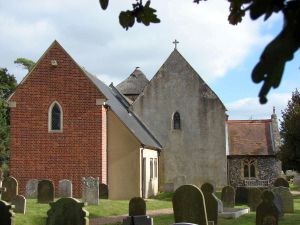
 Xpressions Cafe in Norfolk aims to offer church for those who don't do church. Richard Seel explains how that happens through a number of different 'zones'…
 Some come only to Xpresso but, of those, a number are now prepared to venture upstairs with their children to sample Xpressions or to go into the medieval church building for an Xplore session. We are particularly successful in attracting young families, most of whom are unchurched, the rest being dechurched.
 It all started in December 2007 and at one of the very early meetings we had about Xpressions Café – when I was trying to explain what it was and the vision for it – one of our church members said, 'That's all very well but where is the Gospel in it?' What they meant to say was, 'Where is the preaching of the Word in this?' My answer was, and is, that all of it is the Gospel.
 However, people don't have to stay in the pews of course. For instance, we asked people at an Xplore session to write down their favourite section of the Bible. There is a mixture of Christians and non-Christians in this group so it's interesting. We stretched out a washing line and pegged their Bible 'bits' onto it in chronological order to give an idea of development so Creation was down by the font and Revelation ended up near the Altar! It was a great visual aid.
 One of my visions is to take the principles of Xpressions Café outside the church. When I first started investigating the idea of a café church it seemed to me that many so-called examples were in fact 'ordinary' church with the only difference being that the congregation sat at tables with refreshments for the service but we were looking for dechurched and unchurched.
 At Sileby we used to have coffee afterwards as a 'bridge' between the 9.15 regulars and the main congregation. It originally started because of a shortage of people to help at Sunday School; this particular church had a more elderly fellowship and this was very much seen as a new venture. We really hoped that it would attract families who were just hanging on in there at our churches, and something to invite families from the Baptism roll.
 Others in the circuit started to ask me what was happening at Messy Church in Sileby, and in my other churches too in Barrow upon Soar and Wymeswold. From this I then raised the idea of having a circuit team consisting of local preachers and worship leaders to offer to lead a Messy Church within the churches in the circuit and to help them to start a Messy Church on a regular basis if they so wanted. All circuit staff are actively supportive of this work.
 I have been here in the circuit for 11 years but I will be leaving in 2011. However it's good to see that there are lay people already coming into leadership of Messy Church in my churches. Within the circuit we are also encouraging and developing The 'pastor in every Church scheme' and the three I am working with are all involved in the leading Messy Church, which will enable this work to continue and grow.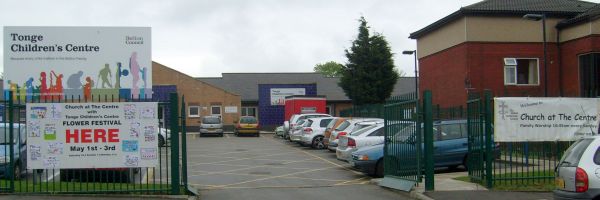

 The church responded by firstly inviting neighbouring churches (Anglican, Methodist and Roman Catholic) to create Churches Together in Tonge Moor. Then after taking advice on the potential uses and limitations of its existing building, the church also approached Bolton Metropolitan Borough Council and East Bolton Regeneration with a view to making the church's land available for the development of a Community Centre, which would include accommodation for the church.
 The Tonge Moor project involves Age Concern, Bolton Council Children's Services, other denominations, local Residents' Associations and URC NW Synod (all represented on the Project Management Group). The church has developed financial management systems for its community support work separate from its life as a worshipping fellowship. This was done to facilitate access to, and eligibility for financial support from a variety of bodies.
 In terms of community development, it takes time to build up relationships so as I'm based in the Centre, I'm able to work with the Centre's community outreach leader to organise some events jointly – it is part of their community cohesion remit and it's our reason for being. We are also building a volunteer base, involving people from church and community, which will help us to offer long-term support in this area. I’m not into offering something that comes and goes very quickly because that builds on the low expectation that many people have around here. People are accustomed to things starting up and then disappearing without trace; this contributes to the feeling that 'we don't matter'.
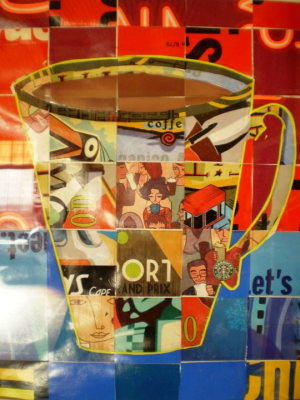
 A recent joint venture involved creating a mosaic on the theme of nature. Anyone who came in to the Centre via the café was invited to join in and it took us three months to complete. We had a community artist working with us and the result is wonderful – the folks who aren't used to being creative have something to be very proud of. As far as the theme of it is concerned, for those who have no faith it's nature, for those with faith it's creation. This is the best visual example so far of what we are trying to do together.
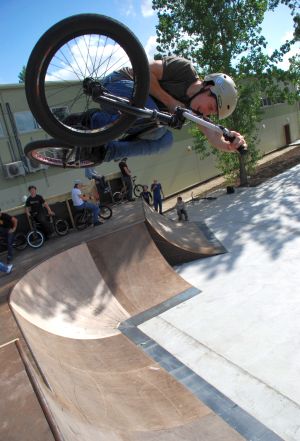
 Legacy XS offers, among other things, indoor and outdoor skate parks, a recording studio, arts suite… and a youth congregation. Leader Pete Hillman gives the lowdown on its work in Essex.
 We decided to reduce the hours we were open to the public and instead of running our midweek sessions on a commercial basis we instead now operate them as cell groups organised by our team of youth workers. That has been running quite successfully on Tuesday evenings for young people from Year 4/5 up to Year 7.
 The Legacy XS youth congregation itself has been much quieter and has shrunk down to a maximum of 20 people. How many of them are moving on in faith? Not many that we know of to be honest. It's better to tell the truth and say it is really, really hard to develop the youth congregation. The fact is that the measure of success and failure in God's economy is quite different. That may make it sound as if we are trying to cover ourselves but that's what we believe. All we say is that it's our job to put Jesus at the centre of what we do, for some young people that will be enough for now because maybe the time isn't yet right for them.
 The team does a lot of teaching work on Canvey Island and we also managed to get some money to buy a 33ft Winnebago-style vehicle to use as a mobile recording studio to go out into different areas. It's like a youth club on wheels.
 You really have to be an entrepreneur if you are going to be doing radical stuff; that can be seen in things like taking risks and being a bit creative about the way you describe what's happening and what you can offer. It's about being as wise as serpents and a bit shrewd about things.
 Cheshire is known to be one of the richest and most exclusive areas of the country but it’s a place of extreme contrasts. Around Knutsford we have the Bentley Garage for Manchester, Premier League footballers in £2m homes, charity shops selling Prada and Gucci – and one of the most deprived wards in the Cheshire East.
 As the church grew, the community named the place. They were very clear they wanted it to be called The Welcome.
 It was suggested that the best thing to do was to separate the two elements of the centre – the business side of it and the church. A new not-for-profit company called The Welcome CIC (Community Interest Company) will run the now refurbished community centre and the café (probably as the trading arm of a charity) while The Welcome Church itself was formally recognised as the newest church in Methodism at a special dedication service in September.