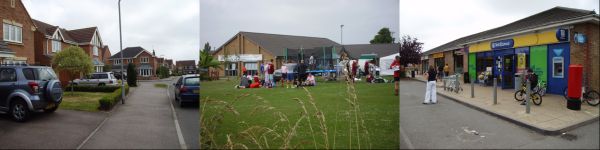
 It used to be an industrial heartland but the Dartford Bridge area became ripe for redevelopment and housing schemes began to spring up on Thames Gateway sites previously dominated by factories and business. The Beacon came into being when the local Methodist Church appointed Bart Woodhouse as lay leader of a new church plant team.
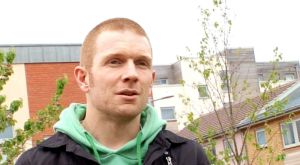
I moved on to the Bridge development in north Dartford with my family while the bulldozers were still very much in evidence in early 2008 so we were among the first five or six people to be here! At first we simply started just to try and meet anyone else who was around so we’d take our children out and about walking, bump into our neighbours and get some conversations going.
 As more and more people began to move on site, I was very keen to start a Residents' Association. We put letters through people's doors and organised an informal meeting in one of the new buildings; about 40 or 50 people come along to it.
We made it very clear that we were a church and that we wanted to work to try and build community here, firstly by getting residents together in that Association and giving them a voice.
That was a really effective way of initially getting the community together and being able to listen to what was going on. In new developments there are always issues with houses and how well the windows keep out water and so on – I was able to actually get some movement on those issues. We saw that as part of our role of building Kingdom. Part of our witness here as Christians was to consider how we could make this place a strong, vibrant and healthy place to be – so very early on we did things like holding a community carol service.
 We then stumbled on the national Big Lunch initiative which encourages communities to get together for food and activities. We had a very popular tug of war, a bouncy castle and a barbecue. We also got local people to bring along some home-made food that expressed something of them and their background – a kind of signature dish. As a result of that we had goat curry and many other wonderful things! About 60 or 70 people come which, from the small community that we are at the moment, was quite a big proportion of the people here.
In our desire to help shape community we'll also be working to help create a community garden on a small plot of land on site that couldn't be built on because there's a high pressure oil pipeline underneath it. The youth club will be involved by creating a piece of art or sculpture for the centre of the garden.
 We had quite a small group of people with us when we started and now there is about nine and 10 on a core team. They all have a real sense of call to be doing this kind of work but we are learning again what it means to be community and what it means to be church together. We've also got quite a large and growing fringe group and we are using things like the Y Course and other things to encourage that fringe to maybe explore the Christian faith and then hopefully transition into the cell life of the church.
It has been very much about winning trust, listening, forming real relationships and friendships with people and trying to demonstrate something of God's love to them in a practical and real way.
 We meet on a Tuesday evening in cell groups – or Beacon groups – and then on one Sunday in the month we all have a big meal together, maybe with some sort of interactive prayer time. The Dartford Bridge Learning and Community Campus has been built on site and we have a room there which is just the right size for us. We also launched a celebration service at the new school on the Bridge Development in January.
Some people want to try and argue that what we're doing isn't really church, saying that it's just an extended house group or something but I really would want to defend what we're doing here by saying that we are authentically church; we are a worshipping community together. We are also about God's mission, demonstrating the Kingdom in this place, worshipping him and finding ways that are relevant for us to do that. We certainly are creating disciples in what we're doing and encouraging others as to what it might mean to explore being disciples of Christ in this place.
 There are a number of challenges that I think we face in trying to shape a full and healthy Christian community here. One of them is that I'm a lay person in the Methodist Church and so I'm not able to preside at the Eucharist meal. I think there needs to be a real integrity about these new communities we're forming in being able to celebrate that meal – and all that it means – together.
We aim to:
- Build a strong church that is rooted in the fullness of God's grace and demonstrates the 'Jesus life' to our community and our world;
- Always strive to foster a strong and real sense of community, one that isn't invasive but supportive;
- Discover a pattern of Christian life that is 24/7, not limited or detached from the rest of our lives;
- Follow Jesus, and by his Spirit, demonstrate his message to others.
Our long term vision here is to create a kind of pattern of church that is so integrally part of this new community and yet is authentically a church expressing all the Kingdom values and living out the message of Christ, seeing people discover faith in Jesus and having their lives changed as a result.
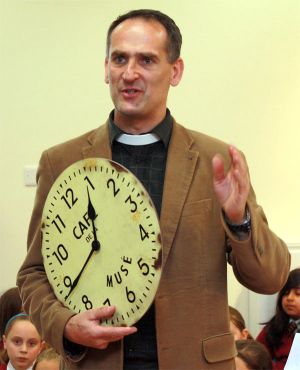
 The Kairos Centre has opened its doors as a building for the community in Grange Park, Northampton. It's a dream come true for project chairman Charlie Nobbs and the start of another chapter in the story of Grange Park Church. Anglican minister Charlie tells the tale.
 As an Anglican and Baptist Church Local Ecumenical Partnership we meet together on Sunday mornings in Grange Park Community Centre in a nearby part of the village but the Kairos building, in a parade of shops opposite a doctors' surgery, is the base for our church office and coffee shop.
 The larger meeting room can take about 60 people and there is also a quiet room; a place where people can have 'kairos' or just find some peace from the hectic pace of life. The lounge area also has a coffee shop currently open four mornings a week as well as a small meeting room and the church office. These rooms can also be used for affordable conference/meeting facilities.
 I gathered a few people together but the Baptists had beaten us to it! They felt that God had called them to plant a cell church at Grange Park and we had a similar sense of calling to what God was doing so we joined forces and started to gather a team.
 Kidzone has continued and grown as an annual event and we usually get 400 to 500 children over three days in the last week of the summer holidays. As our aim is to be good news in the community, Kidzone is something that has worked very well in letting people know there is a church, that it is good to have it and begin to build relationships.
 The good news is that the Health Visitors believe Talking Point has significantly improved the mental health of struggling mums as it is a network which picks up different people. We now have various Talking Point groups in and around Grange Park. We use cell principles and organise a social night for the parents without their kids; it welds them together as a cohesive group.
 That in turn has developed because several mums said they wanted to find out more; their children were asking questions they didn't know the answer to and the parents also thought of the Bible stories as being a 'good thing' to teach the little ones.
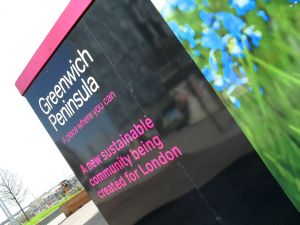
 After many years of working in the area, Greenwich United Church (United Reformed and Methodist) has started a fresh expression of church on the Greenwich Peninsula. SACRED explores the sacred in body, mind, heart and spirit. Revd Martyn Coe explains more.
 We meet in Millennium Primary School on Wednesday nights for about an hour-and-a-half and have a four weekly pattern encompassing worship, reflection, thinking creativity and symbolic action. We look at Heart – looking inside ourselves; Body – worship reflecting on the whole body of Christ throughout the world; Spirit – communion influenced by the Iona Community and Head – using a DVD study course to explore faith.
 There is undoubtedly pressure on developers to keep to that deadline – otherwise it will still be 3,000 parking spaces by 2012. That wouldn’t look too good with the world's cameras trained on London!
 We are looking to welcome to people when they move into the area, a sort of drop-in facility. As part of that we are in talks with the local authority and the Scout District about starting Beavers and Cubs to meet immediately before SACRED.
 We also need to be aware that in many of these new developments what looks like public space may not be public space at all. I may think I'm on public property because it's an open, green area but I could be asked to leave it because I am actually on private land.
 We are talking about offering daily prayer there in the middle of the day. Everyone involved is hoping that it will work together but we have been very, very clear that what we are doing is a multi faith activity rather than an inter faith activity. We are people of faith working alongside each other for the common good.
 St Paul's is an Anglican church in Willington Quay, an area of urban deprivation on the banks of the Tyne. In 2000 the church was reordered to accommodate a community project, managed by the church. Steve Dixon, Church Army Evangelist and Lay Pioneer Ministry in the Diocese of Newcastle, continues the story.
 In amongst this is St Paul's Church, which was one of nine churches in the area. As the area suffered increasingly from the trauma of post-industrialisation, all the other churches were demolished as their congregations became unsustainable. In response to the increasing social needs, St Paul's Church was reordered in 2000 to accommodate a community project, managed by the church. This was a very brave decision, as St Paul's Church itself was finding it difficult to keep going.
 The project aims to make a difference to local people facing deprivation, with groups and support for single parent families, young people, people living with long-term unemployment and older people. All these activities were centred on offering loving service, working in partnership with local government and other voluntary organisations. The project has created social cohesion for those engaged with it. We can expect 150 people to turn up for community events that we run, because there is now real ownership of it. My post was created by the Diocese to develop a fresh expression of church out of the work of the project, as part of a team ministry. Given that there is now a viable community, I was charged with exploring the need for discipleship and forms of worship. The two church wardens and I are the people on the ground. One of the first things we have done is to set up a new more inclusive and empowering management approach to the project, now called 'St Paul's Community Partnership', that involves local residents and institutions.
 We did a lot of thinking about how we can rebuild a form of church coming out of the project. Do we start with some form of discipleship course or worship gathering as a bit of a taster – to give people room to explore questions? We chose the latter, because contextually there is real resistance to training and education type approaches, as many people here had a poor experience of education. So on Pentecost Sunday 2009 we started worship services again in the church, using the CPAS 'Start course' and adapting it to meet the discipleship needs of our context.
 The Church now faces new challenges. A lot of the ex-industrial land has been bought up for new housing, for those who have money. Clearly this is not going to be the people who already live here. It seems that more affluent people living in Tyne & Wear are moving in. This raises huge issues around social cohesion, with the 'have's and the 'have not's living in different parts of our expanding village. We are currently exploring setting up some new forms of groups such as book clubs, evening classes and explorations of spirituality to engage in these 'new build' areas. We are still dreaming!
 Three years ago I moved with my family to Mawsley in my first post as a Curate. 'Christians in Mawsley' was then a group of Christians coming from different traditions that didn't really reach out to the village. There was a sense of collaboration and enthusiasm but no clear strategic purpose, and I was asked to assist in developing this into what we would call now a fresh expression of church. I was a traditional curate in a benefice to four churches in other villages, but also being a pioneer in Mawsley.
 Building on growing relationships with local people in Mawsley we began twice-monthly gatherings for public worship in December 2006. We meet on Sunday mornings in a Community Centre in the heart of the village – very much in secular space – where children's ministry began last year. Small groups have also met, with varying degrees of success, in homes across Mawsley. Larger scale 'messy church' events for children up to 10 years of age and their carers have become a regular opportunity for outreach here at significant times such as Christmas & Easter (and have spread to a nearby village too). We deliberately hold these in Mawsley's local Primary School. These more participative forms of worship have successfully engaged with fringe people, again of the 'de-and-unchurched' type. This year on Easter Monday, we had a Messy Church event and ninety-five children plus their parents and helpers attended. For the first time the school parents' group asked to be involved this year. These events happen mainly because of the participation of many fringe and non-church parents.
 We have sought to develop our participation with other village events as a form of outreach to local people. So we play our part in fayres, family 'It's a Knockout' and other social events, and this has increased our ability to build relationships with people who do not go to church. Regular assemblies, a Bumps & Buggies group and starting an annual litter pick have also played their part, too.
 I made a conscious decision when I went to Mawsley to invest some time in me. I wanted to discover my spiritual side, and in response to my experience at the convalescent home, I plucked up the courage to go to Mawsley Church. I took the children with me. Everyone was so welcoming and I soon came to learn that the small congregation were all on different parts of their spiritual journey. It was within Mawsley church that I found the family I had yearned for. It was right here on my doorstep.
 I was not the only one to benefit from my experiences with our church. The children made new friends, and drew strength from the improvement they saw in me, a happier mummy. The question arose around baptism and I pondered over my decision for many months. I let the children decide whether they also wanted to be baptised. The answer was a resounding yes. I decided it would be a wonderful idea to have a family baptism. I wanted to share this point of Megan and Ewans spiritual journey. I saw my position as their spiritual guide, equipping them with the many tools our faith offered for their later journey in life. On the 28th September 2008, we had the marvellous experience of being baptised by submersion as a family at Mawsley Church. It was an incredibly charged moment for me personally, I could barely hold back my tears of emotion. That day I felt all three of us had turned a corner and we began a new journey strengthened by the love of God.