 It used to be an industrial heartland but the Dartford Bridge area became ripe for redevelopment and housing schemes began to spring up on Thames Gateway sites previously dominated by factories and business. The Beacon came into being when the local Methodist Church appointed Bart Woodhouse as lay leader of a new church plant team.
I moved on to the Bridge development in north Dartford with my family while the bulldozers were still very much in evidence in early 2008 so we were among the first five or six people to be here! At first we simply started just to try and meet anyone else who was around so we’d take our children out and about walking, bump into our neighbours and get some conversations going.
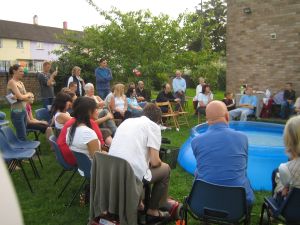
 As more and more people began to move on site, I was very keen to start a Residents' Association. We put letters through people's doors and organised an informal meeting in one of the new buildings; about 40 or 50 people come along to it.
We made it very clear that we were a church and that we wanted to work to try and build community here, firstly by getting residents together in that Association and giving them a voice.
That was a really effective way of initially getting the community together and being able to listen to what was going on. In new developments there are always issues with houses and how well the windows keep out water and so on – I was able to actually get some movement on those issues. We saw that as part of our role of building Kingdom. Part of our witness here as Christians was to consider how we could make this place a strong, vibrant and healthy place to be – so very early on we did things like holding a community carol service.
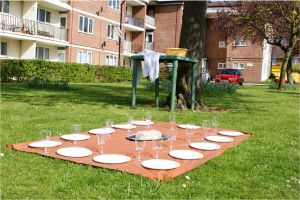
 We then stumbled on the national Big Lunch initiative which encourages communities to get together for food and activities. We had a very popular tug of war, a bouncy castle and a barbecue. We also got local people to bring along some home-made food that expressed something of them and their background – a kind of signature dish. As a result of that we had goat curry and many other wonderful things! About 60 or 70 people come which, from the small community that we are at the moment, was quite a big proportion of the people here.
In our desire to help shape community we'll also be working to help create a community garden on a small plot of land on site that couldn't be built on because there's a high pressure oil pipeline underneath it. The youth club will be involved by creating a piece of art or sculpture for the centre of the garden.
 We had quite a small group of people with us when we started and now there is about nine and 10 on a core team. They all have a real sense of call to be doing this kind of work but we are learning again what it means to be community and what it means to be church together. We've also got quite a large and growing fringe group and we are using things like the Y Course and other things to encourage that fringe to maybe explore the Christian faith and then hopefully transition into the cell life of the church.
It has been very much about winning trust, listening, forming real relationships and friendships with people and trying to demonstrate something of God's love to them in a practical and real way.
 We meet on a Tuesday evening in cell groups – or Beacon groups – and then on one Sunday in the month we all have a big meal together, maybe with some sort of interactive prayer time. The Dartford Bridge Learning and Community Campus has been built on site and we have a room there which is just the right size for us. We also launched a celebration service at the new school on the Bridge Development in January.
Some people want to try and argue that what we're doing isn't really church, saying that it's just an extended house group or something but I really would want to defend what we're doing here by saying that we are authentically church; we are a worshipping community together. We are also about God's mission, demonstrating the Kingdom in this place, worshipping him and finding ways that are relevant for us to do that. We certainly are creating disciples in what we're doing and encouraging others as to what it might mean to explore being disciples of Christ in this place.
 There are a number of challenges that I think we face in trying to shape a full and healthy Christian community here. One of them is that I'm a lay person in the Methodist Church and so I'm not able to preside at the Eucharist meal. I think there needs to be a real integrity about these new communities we're forming in being able to celebrate that meal – and all that it means – together.
We aim to:
- Build a strong church that is rooted in the fullness of God's grace and demonstrates the 'Jesus life' to our community and our world;
- Always strive to foster a strong and real sense of community, one that isn't invasive but supportive;
- Discover a pattern of Christian life that is 24/7, not limited or detached from the rest of our lives;
- Follow Jesus, and by his Spirit, demonstrate his message to others.
Our long term vision here is to create a kind of pattern of church that is so integrally part of this new community and yet is authentically a church expressing all the Kingdom values and living out the message of Christ, seeing people discover faith in Jesus and having their lives changed as a result.
 There are lots of facilities on the base and they also have a padre but people are encouraged to worship outside the camp at churches in the town, there is no provision for church worship on the base itself. This can be quite difficult for people to access in an unknown place so I see part of my role as being that of a welcomer. I speak several languages, including French, German and Italian so I'm hoping that I can make myself understood when the time is right! The influx of people comes from all over the place, including Italy, Poland, Portugal, Turkey and Spain. The whole world appears to be on my doorstep.
 Alongside them we do get some younger families but we haven't got as many in the middle age group. I am curate at St John the Evangelist (Churchdown and Innsworth) but there wasn't a church presence actually on the estate which meant that people could feel a bit isolated from the rest of the parish – part of a Local Ecumenical Partnership which supports the Pioneer Minister work.
 During Holy Week I put up installations on the green spaces in the community. It was quite funny getting permission; I went into the police station and said, 'Can I have some police incident tape? I would like to create a scene of arrest.' They agreed but said they thought it would be vandalised. I was putting it up when a car full of young lads came to a screeching halt alongside me. They asked if there had been a crime, I said no but it was meant to remind people of a man who was wrongly arrested for what he did for us. 'Can we help?' they said. I asked them to make sure it stayed safe. I don't know what they did – or didn't – do but it never got vandalised.
 What I suppose is lacking at the moment is people emerging from the community to be leaders but it's early days yet. When people want things 'done' – like baptism or a wedding – they actually still tend to look for a tower or spire but for those who are unchurched, a church building and a normal church service is too much. I'm not in the business of forcing people to come into traditional church.
 The Ruth Project, part of the North West Durham Methodist Circuit, has been building community on an estate in South Stanley. Grace Cauldwell became its first project worker in September 2006. She explains how patience is a virtue when it comes to relationship building:
 I settled in straight away and spent the first 12-18months just getting to know the area, joining in with what was already happening and becoming known in the community centres. My dog Jasper, a black and white labrador pointer cross, was absolutely key at the start of it all because I'd go out for a walk with him and many people would stop to say hello.
 After a while, more relationship building, and various other failed 'events' we started something called Friday Fun Factory. At first we got 10 kids, then it was seven, then two, then six. At one point near Christmas we had just one child. When the New Year started, we republicised it – through all the local schools, shops and school assemblies and the children started to come. We visit all the families every week with a fun sheet to tell them what the children were doing as part of the Fun Factory (and with the hope of a prize on it's return!)– and that has been a really good way to get to know people.
 Since January 2010 we have had six to 12 parents and their friends coming along and they have been getting really involved in what has been going on. It has become a sort of family church with none of the hang-ups they see as being part of traditional church. We worship (without hymns or singing mostly!), have a silly Bible story with a life application, and enjoy a great time together with arty crafty stuff and a lot of games. In the last two or three months the children have started asking to pray. Praying is something we really believe in, but getting them to say prayers out loud in a circle seems very religious- however this has come directly from the children – they do it comfortably and it's something they asked to do! Spirituality in a lot of families has just started to blossom, with people meeting Jesus in very real ways.
 My post was originally for five years with promises of continuation funding for 10 but funding is sadly no longer available and I leave this summer. It's incredibly difficult; what's here at the moment is not self-sustaining and it's going to be at the very least another five years before it is. I am hoping we can try and keep something going because a lot of what I do is simply about being here, having a physical presence.
 It's the people I will miss; people like Joe, his wife and daughter. Joe is clearly a man of God but doesn't quite know how to put that into words because he would say a Christian is boring, wears a suit and is rude to people. Raising indigenous leadership is difficult but Joe now volunteers for everything we do. He started coming to us to make our refreshments; he now looks after our registration and acts as 'security man'. Getting him to have the confidence to do that was difficult enough without asking him to take on leadership. You can't expect to raise up a confident and humble leader in a short period of time.
 Many people I've come across here do not read often, sometimes they can only read with great difficulty so it's about making discipleship that's right for them. So many resources are too text based, and often speak into a middle class situation, and so providing suitable and relevant teaching and discipleship is not an easy task.
 The Kairos Centre has opened its doors as a building for the community in Grange Park, Northampton. It's a dream come true for project chairman Charlie Nobbs and the start of another chapter in the story of Grange Park Church. Anglican minister Charlie tells the tale.
 As an Anglican and Baptist Church Local Ecumenical Partnership we meet together on Sunday mornings in Grange Park Community Centre in a nearby part of the village but the Kairos building, in a parade of shops opposite a doctors' surgery, is the base for our church office and coffee shop.
 The larger meeting room can take about 60 people and there is also a quiet room; a place where people can have 'kairos' or just find some peace from the hectic pace of life. The lounge area also has a coffee shop currently open four mornings a week as well as a small meeting room and the church office. These rooms can also be used for affordable conference/meeting facilities.
 I gathered a few people together but the Baptists had beaten us to it! They felt that God had called them to plant a cell church at Grange Park and we had a similar sense of calling to what God was doing so we joined forces and started to gather a team.
 Kidzone has continued and grown as an annual event and we usually get 400 to 500 children over three days in the last week of the summer holidays. As our aim is to be good news in the community, Kidzone is something that has worked very well in letting people know there is a church, that it is good to have it and begin to build relationships.
 The good news is that the Health Visitors believe Talking Point has significantly improved the mental health of struggling mums as it is a network which picks up different people. We now have various Talking Point groups in and around Grange Park. We use cell principles and organise a social night for the parents without their kids; it welds them together as a cohesive group.
 That in turn has developed because several mums said they wanted to find out more; their children were asking questions they didn't know the answer to and the parents also thought of the Bible stories as being a 'good thing' to teach the little ones.
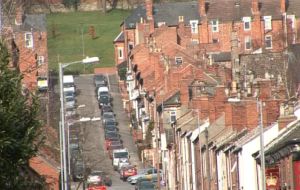
 When Carl and Sarah Belcher arrived in Lincoln after working for Eden in Salford, they spent six months praying and slowly realised God was calling them to work with vulnerable people in a needy area of the cathedral city. Soon a fresh expression of church was emerging.
 Sarah and Carl realised there were established churches in the area and had no plans to start another, but by what Carl calls a 'happy accident' they began to meet with needy people who were struggling to engage with church as it is and had no background in the Christian faith at all.
 This fresh expression of church places a high level of importance on helping people in practical ways with housing, employment and life-style difficulties, without being judgemental. Carl and Sarah are 'tent-makers', leading the congregation but doing some paid work too.
 Richard, who is in his twenties, says he is a different person, after having stumbled across Threshold in a local park. He has found faith and God has made a real difference to his life.
 Christine was homeless and widowed and life was very difficult. Then she heard about the new church and went along. She was baptised and said her life has been transformed. Life still isn't straightforward but her addiction problems are much less severe and she no longer goes out 'looking for fights'.
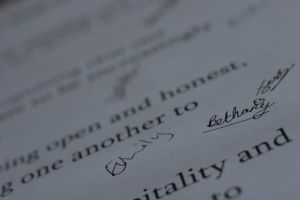
 On 21st March, the Bishop, Dr Graham Kings, came and commissioned us as a community at a café in the town. We had about 70 people there and started off with some children's activities before the bishop led the commissioning and we signed the rule of life – something we had been developing in our meetings since Christmas by looking at Acts and the gospels to find out what it means to be a community of disciples. The rule was signed by all the community and the commissioning was essentially a commitment by us all to seek to live the life expressed in the rule.
 We organise felt making sessions as part of our outreach activity, and we made felt 'stones' on the commissioning day to be included in a prayer cairn. People came up and prayed for Reconnect as they put down one of the stones. The bishop also seemed to enjoy the day, even having his face painted (after the ceremony!)
 We see Reconnect as a shop window to say Church is not just about Sunday mornings, it's about many other things. Our aim for Sundays is to meet in such a way that our energy can be put into making friends with non-Christians in the area and serve the community. One of the most effective ways so far has been to clean the local beach a couple of times! It was an easy thing for us to go and do. The first time we did it we had various people ask us what were we doing, and the second time we had four local residents come and join us to help.
 We have a monthly pattern of meeting one Sunday in a local school, the second Sunday in our homes, third Sunday 'out and about' serving the community and fourth Sunday worshipping at other local churches. We dub this 'Festival' Sunday when Reconnect regulars go to a church somewhere else. We can't provide the experience of a bigger church, worshipping in a larger fellowship, so we say go and enjoy that experience and feed back into Reconnect. We also meet as adults on a Tuesday evening to worship, pray and explore our mission and community values together.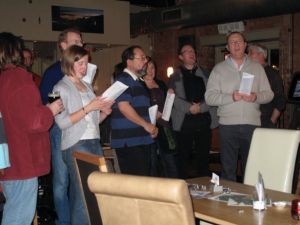
 It all happened very quickly. I started in post at the end of May 2009, discussions took place over the summer to sort out the BMO, and it was signed in December at a Beer&Carols event. We certainly reaped the benefits of the hard work that other BMOs had done before us in Exeter and Thanet.
 In the middle of the BMO area is The Quay, a canal side pub which was itself part of a regeneration project a few years ago. It is now the base for Presence's midweek meetings, and some of those at Presence have become regulars at the pub’s open mic session on Thursday nights.
 The regeneration of great swathes of the city means that new communities have become cut off from parish churches because the landscape has shifted, but by starting a fresh expression alongside those churches, we can redefine a pastoral boundary. It has just worked brilliantly in that it's possible to run a straight mixed economy which lets the existing parishes do what they do while we look at how we use these places in new and creative ways.
 This is a minimum 10 year project, and part of the challenge is that the landscape will continue to change dramatically during that time. Large brownfield sites in our area are set aside for new developments but are yet to be built on, so we need to be flexible in our approach and planning.
 We also very much hope to be involved at The Quay on St Patrick's Day. There are lots of possibilities but we might look at having a religious 'bit' followed by Open Communion using Naan bread – reflecting the type of area we're in. We want to reclaim these celebrations for God, and show that we're a church of festival and fun.
 Kevin Metcalf, Church Army Evangelist, describes his early attempts at pioneering in Bangor, Northern Ireland.
 At present there is very little for younger people to do on the Bloomfield Estate, so I have been developing relationships with community workers to identify needs. I am passionate about children's work, so I have been focusing on activities that engage with younger people and provide positive opportunities. Although local young people have a lot of religious and bible knowledge through school education, many do not have a form of the Christian faith that resources their life. For example, at the local school of three hundred and fifty young people, only fifty have a stated religious affiliation, leaving three hundred with none. So in the context of Northern Ireland this is a bit of a paradox. Even though it is a very ‘religious' country, many do not have a committed faith that they find to be spiritually resourcing. My aim then is to enable younger people to come to faith and experience Jesus in a real and living way, not just knowing about him, but knowing him personally. Through this, I want to see whole families come to faith.
 So far, I have built up connections with a local school, and a community association in the Council Estate. At the school I have been engaged with children through assemblies and after school clubs. In these times I have been using crafts and other activities as well as talking about God. In the Community house we have been running a 'Kidz Klub', using similar activities with a limited number of children as the space is quite small. To build on these relationships and see the work develop and grow, we have started running another Kidz Klub in the local primary school and a team of Christian volunteers visit the homes of the children who attend. Our first night we had 48 children! Through this we are building relationships with families on the estate and discovering how we can help support the wider environment of the children and witness to God's love.
 The use of this primary school, I think will give us the space to build up a fresh expression of church. We are very aware that the local middle-class forms of traditional church are an alien environment for many people coming from the Bloomfield Estate. So we hope that a 'Messy Church' approach will be flexible, accessible and more laid-back and therefore appropriate. This will enable people to explore Christian spirituality, and the big issues of life, but also an opportunity to build relationships with local people.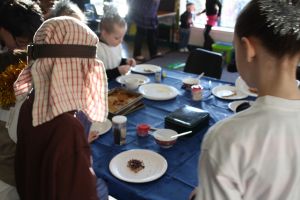
 We had a trial run at Wilmcote House on four successive Sundays earlier in the year. As a result of that, one family – who live in Wilmcote House – decided to join us. At Christmas we had the Wilmcote House Nativity. All ages were welcome and children had the chance to dress as an angel or shepherd to hear the Christmas story, enjoy a free breakfast and take part in some craft sessions.