
Lieutenant Catherine Dodd is leader of The Salvation Army in Cortonwood, South Yorkshire. She tells how their mission to 'go, gather and grow' has developed in the past six months.
I've been in church leadership for the past 10 years and had been serving part-time at Cortonwood since 2010 – alongside being the Officer (Minister) at an established Salvation Army church locally. In October 2013 I was appointed as the full-time leader here and Cortonwood was recognised by The Salvation Army as a new Church plant. We are situated right at the heart of our community, in a neutral venue above the Cortonwood Miners' Welfare Club.
Cortonwood was deeply affected by the miners' strike 30 years ago and the subsequent demise of the UK coal industry. Cortonwood Colliery closed and, as the biggest employer locally, this meant that life was changed forever for most of the families here. As a miner's daughter, I understand the culture and have a heart for the people of ex-mining communities.
 It had been felt for some time that God wanted to do a new thing in the Dearne Valley, and so began the process of discerning the 'what' and 'where'. Since 2010, The Salvation Army had been experimenting with different ministries through the formation of a Dearne Valley Planting Team, which I was blessed to part of. Confirmation soon came that Cortonwood was the place where God wanted us to be.
There was no physical Church presence in Cortonwood – the Methodist Chapel closed a few years back, and the parish church is situated in a neighbouring village, but I always believed that God wanted to build a church here in Cortonwood. Furthermore, I discerned that it was never his intention to plant a Church by parachuting in a group of Christians. He made it clear to me that this new plant was to be formed from people within the community who, for whatever reason, were not engaging with a traditional, attractional model of church. He wanted it to emerge from us 'journeying out' and coming alongside the community, working with them and seeing what would develop – without being prescriptive as to what it would look like or what shape it would be. To have the freedom to be part of that from the very early days, and then go on to lead that, is a great blessing.
 Initially, we did not have a base of our own and so we used various community venues as gathering places, which is something that we still do and are keen to maintain– we didn't want to go down the route of having one place that would be regarded as 'Church'. We have been blessed with the provision of our base at the Miners' Welfare Club, which provides us with office space, a community prayer room and multipurpose room – it's an accessible place where people can come along without it being a traditional Church building, which can sometimes be a barrier to people. We use it for some of our events, but by no means all.
One of the venues that we use is Costa Coffee. We have always had a good relationship with the manager there, and so when we were looking for a venue for worship we made an approach and we were delighted to be allowed to use this space. Since June 2012, we have used Costa as the venue for our now monthly worship event 'The Gathering', where we meet after hours on a Sunday evening. It's an event which is aimed at unchurched people, where there is good coffee, conversation, live music and opportunity to pause for thought.
 We were very keen to have multiple connection points with our church. Some of the activities that we are currently delivering include weekly school's ministry, Toddlersong, food drop-in (with budgeting advice on offer too) and a Community Choir. Since January 2014, a weekly informal and conversational cell group has commenced which we call 'Time & Space', giving people an opportunity to ask the difficult questions as they explore faith. It's beautiful to see how God brings that together. The people are shaping that time of worship themselves through partnering with the Spirit; that's the way it's got to be. We have some powerful prayer times and it's very raw; it's allowing people to 'be' where they are. We have got a lot of needs in this area and some people feel downtrodden; when they start to see their value in the eyes of God, it's quite a special moment.
The key to relevance, is, for me, all about being willing to be experimental and acknowledging that this is a valid form of church. It has to be fluid. Whatever we start, we are not going to put it on tablets of stone and continue with something ad infinitum; we view things in seasons, and we just go with it. I believe this missional community, this fresh expression, is not a 'stepping stone' to traditional church – it is certainly church in its own right; yes it's firmly rooted in Salvationist doctrine but we are not frightened to be quite pioneering in the ways we go and reach out to the community.
 We want this to a place where people feel safe, welcomed and loved, where we can work out together what it means to be disciples of Jesus today as we serve the community of Cortonwood.
It's wonderful to see individual's lives being changed as God’s work develops. One of the guys, who is coming to food bank, wants to start to get involved in volunteering; we are also establishing a community allotment as a means of creating community, tackling food poverty by growing fresh fruit and veg for our food drop-in and caring for creation, and we are also seeing people from our local community get involved with this.
It's still very early days but it's a wonderfully energising thing to be involved in – you know that when you get up in the morning you are going to see evidence of what God's doing in people's lives. I have always had a heart for the unchurched and a real concern that people need to hear the gospel but can't – or won't – come to established church. At Cortonwood, we are seeing people engaging with our way of being Church who would not otherwise do so. It's so important to come alongside people in relevant ways as part of their community and leave it to God to engineer the conversation. We've seen that happening in all sorts of ways, including through the local school, where I have been involved for the past four years, and have recently taken on the role as School Chaplain. We did a whole school, in-school Messy Nativity and most recently a Messy Easter for all children and their parents.
 Our next priorities will be serving people in practical ways by offering 'eating on a budget' (cook 'n' eat) sessions, and setting up as an Employment Plus Centre, where people can come along and receive help in their job searching. It's all part of discerning the current needs within our community and responding accordingly.
In January, Vicky Hughes joined our team as a part-time Community Development Coordinator. Her role is to develop the food bank and get our community allotment up and running. She will also ascertain community needs and put plans in place to ensure that we can, in the name of Jesus, do something to help towards meeting those needs.
Life can seem very busy at times as I seek to balance ministry and family life. As well as leading this church plant, I'm also doing a MA in Aspects of Biblical Interpretation through London School of Theology. Distance learning can be difficult and the 10 hours of study per week can be tricky to fit in but I carry on with what God has set before me; I always find that he gives me the time I need to do what he wants me to do. I never feel overwhelmed in any way, and firmly believe that Cortonwood is where God has called me to be.
 Church has got to be accessible for people. We need to be available to our communities, to love them and be prepared to journey with them in an authentic way. When we move away from our perceptions of how church should look and abandon ourselves to the Spirit, then we see God do amazing things. It is a joy to behold. Lord, may your Kingdom come, your will be done in Cortonwood, as it is in heaven.
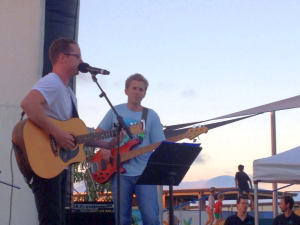


 Our meetings start with a 'sixty Seconds with…' slot when a volunteer is asked three questions in a minute. This not only acts as an ice-breaker but it provides an opportunity for an initial personal reflection on the message theme. The table groups then chat around those questions as we eat.
 In the light of Caloundra Uniting Church being our supportive 'mothership', I attend their church council meetings. Their insurance and finance people also look after our necessary bureaucracy.
 It's in Halifax town centre and the areas that we draw from are urban priority with the church itself sitting in one of the poorest parishes in the UK.
 All of this made me think about church not working properly for newcomers who didn't 'fit in' and I knew we had to do something different in order to prepare the way for them.
 Our community had already decided because they were referring to Saturday Gathering as church. This was underlined on Saturday (11th January 2014) when the Bishop of Pontefract baptised and confirmed 19 of our new family members, all of whom wanted the service to be in the place that had become their spiritual home. We now describe it as a church that is both dependent – and interdependent – on other churches.
 I will do everything I can to encourage indigenous leadership but that really does take time – unless God provides people out of the blue! Something that has proved to be helpful is the involvement of a few of our guys as 'watchmen' at Saturday Gathering. It's quite a male concentrated community so the 'watchmen' keep an eye out for anyone trying to bring in alcohol or drugs of any kind. They also watch over what's happening and are happy to go and pray with anyone who is on their own. Being a 'watchman' gives them bit of authority that enables them rather than constrains them.
 Financial support has come from some interesting places. Not long after we started Saturday Gathering, the police got in touch to say they had got some money they would like us to apply for because we were taking their worst culprits off the streets on a Saturday night! Saturday Gathering running costs are £100 a week for food and renting of the room and, up to now, the community fund the police recommended to us have given us about £2,500 – so they have basically funded all of our food.
 Such a lot has happened in a relatively short time, and we thank God for all He has done and is doing. It is a real privilege to be able to join in with what He is doing. But I'd want to say that what has happened here can’t just be replicated. Saturday Gathering, as it is, is unique to this area but I really pray that we may be able to share some of our learning and ways of doing things with others praying about what might be applicable to their own context.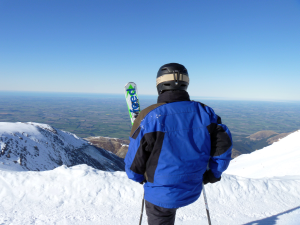
 It started because people come to Methven from all around the world to work in the ski/snowboard industry. Some might be Mt Hutt staff, like instructors, or they may work in the hospitality and catering industry. They need to hear about Jesus! The church very much saw a need in its surrounding area and began a fresh expression to engage with that need.
 The format each week is:
 There was a break of nearly a year between ministers and, during that time, feed. was lay-run – with visiting speakers each week. The church 'really 'took ownership' of feed. and there is still a lot of lay involvement, particularly in getting everything ready, technical stuff (audio visual), cooking, washing up and packing everything away. It's pretty labour intensive, particularly the cooking, as we average about 30-40 people each week but we have had over 60 people at times.
 I am also a chaplain for Mt Hutt and this is a ministry which very much complements 'feed.' in that I am part of the employment support for employees and guests. This means I actively build relationships with the staff, some of whom also come along to 'feed'. Many of them are also 'locals' so the chaplaincy is a community role which allows me to build connections with people in the immediate area.
 We want to reach those not normally reached by traditional churches because 'traditional church' is unattractive to this segment of the community – hence the subtitle under 'feed' is 'Church done differently'.
 Feed. really is a church in its own right. We also run a more traditional morning church in Methven, but it doesn't mean that the people who come in the evening are any different from those who come in the morning; they both get the same spiritual food (my sermons are the same, although adapted to suit the audience). We don't expect people to 'graduate' to traditional church, they are already are 'in church'.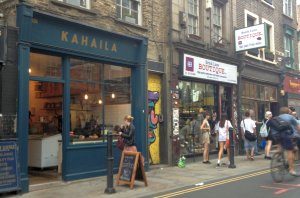
 I could never have imagined what has happened since then and I am in awe of all that God has been doing since the café got off the ground. We have had a very good response from local people and businesses and we are generating four times as much business than we originally anticipated! That is particularly good because we are a charity, so any profit that is made goes into supporting local community projects and other causes.
 Home Mission awarded us a grant in 2011 and others believed in it too, with friends in the Anglican church and many individuals giving cash backing. Kahaila opened its doors to the public in June last year and things have gone so well that the trustees of the project agreed they would not need any Home Mission Support after the end of 2012.
 It took a huge amount of faith on many people's part to get this off the ground – to get the money and to get the building. Then, once it had been transformed into a café, the challenge was, 'How can we make sure it makes money? It's a business and, if the business fails, the mission fails
 At this stage in the life of Kahaila, we are constantly experimenting as to how we build community and relationship through intellectual, creative and social events. A monthly 'bring and share' supper club involves us inviting regular customers to come and have a meal together. The regular programme of activities includes things like origami, a book club and live music and poetry. Much of it develops because someone enjoys doing a particular art or craft, for example, and they ask if they could do it in the café. We just say, 'Do it and see what happens'.
  Kahaila is a 'crossing place' between Christians and non-Christians and, as a model, it demonstrates that the faith community (church) is at the centre of the café and all its activities. As a result, I feel like I have more significant conversations with people in one week than I had in one year working in a church building. What encourages me is that these conversations just happen by being available in the café. There have been so many examples of this, including a Muslim man from a neighbouring shop who came in and asked us to pray for him. So, in the middle of the café, we prayed God's blessing on him in the name of Jesus.
 Another fantastic thing that we see happening is the effect on those working with us at Kahaila. We have a core team of about 20 and I believe that all of us are called to leadership in one form or another. Encouragement of young leaders is particularly important to me and we have seen many of them go much deeper in their discipleship; in their early 20s they are developing ministries to prostitutes in the area, to ex-offenders, to those in desperate need. My role involves looking at how I can release people into the calling that God has placed on them. They then go on to inspire others to do the same.
 I don't see us as being 'radical' in any way I think we're just doing what Christians have always been called to do – which is to go. When the Spirit comes in power it sends us out. So we probably just need to get out of our churches a bit more and start meeting the people where they're at – rather than expecting them to come in to where we are.


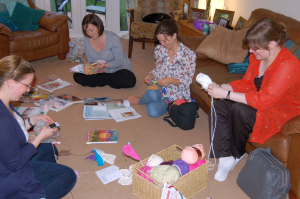
 I have been here for just over 20 months and, in that time, my priority has simply been to get to know as many people as possible. I started by having regular curry nights at my house and, from that, people would suggest different things we might do. This led to 'Stitch and Yarn' which involves people coming together for crochet, knitting or some sort of stitch craft; a cup of tea and a lot of chat. We've also had quizzes, running sessions, picnics and even a 'bake-off' around the kitchens of Roundhouse Park. We are trying to offer as diverse a range of activities as we can but we are still in quite an exploratory phase.
 The café would not only provide a physical focus for activities but, from the very start, be a spiritual hub. For us it's very important that Christian contemplative prayer and prayer stations of some sort would be 'built into' the rhythm of all activities there to give people the chance to explore Christian spirituality in a very familiar setting. It would be part and parcel of what's available and should beg the questions, 'What does it mean to live well? What would that mean to a community of people exploring faith together, meeting in a café space or school?'
 As a giving, supporting, encouraging new community of faith is formed at Roundhouse; that will be 'proper church' too.
 The Gate is perfectly situated to be the soil in which a new monastic community could grow because it has all the key elements – a good reputation, people who regularly come in, existing Christian connections and a bar! There are also amazing opportunities for ministry amongst the groups already connected with the venue.
 This whole venture is non-stipendiary so I have no regular income though I do run a tentmaking enterprise called Solace Ministries – as part of which I conduct religious and civil weddings, blessings and funerals. I am still exploring a vision in the longer term to see a new monastic community that is based in, owns and runs a cafe bar/pub. The 'abbey' or 'Monastery Pub' would be a home, hub and base for the community, providing a centre for meeting, mission and ministry. It would provide a centre to go out from and come home to.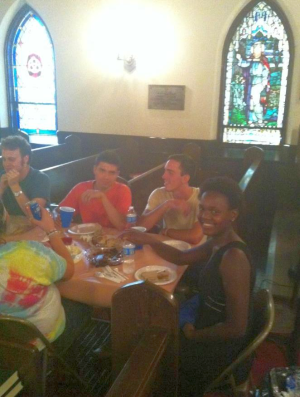
 In collaboration with the Rev Beth Turner from the Diocese of Western North Carolina – who created and is currently hosting several feast communities in that diocese – we are experimenting and adapting their model for use here in southern Ohio. Beth's vision was for Eucharistic communities of practice, in her case aimed at young adults, but hosted by churches or older adults in their homes or other community gathering places. She agreed that I might try to host some feasts in Ohio.
 Beth and I see these feast communities as possibly growing into 'church' or Christian 'communities of practice' (which is the language I have been using to hold space for people for whom church is problematic). Some of our young adults are engaged in 'traditional church communities' but come to the feasts for the conversation and sense of community. We also have people who don't go to any church and probably won't. So, in that way, they are church in their own right.