
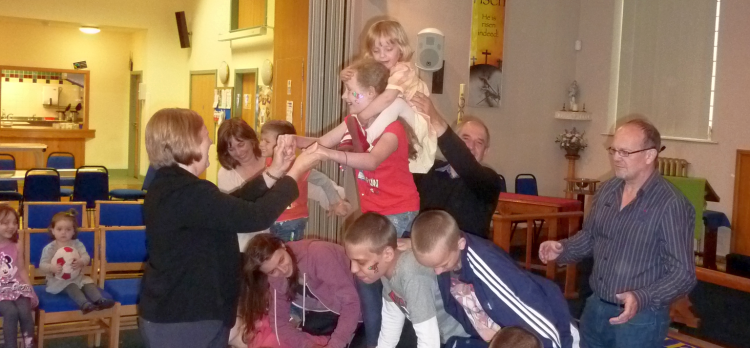
Julie Cotterill is fresh expression of church minister at New Cross Community Church in Sutton-in-Ashfield. She tells how 11 Alive has developed.
New Cross is a Methodist and Anglican LEP but, of course, local people don't see it as an LEP at all; they just see us as a church.
We have a more traditional service at 9.30am and the congregation there played a key role in helping 11 Alive to get off the ground four-and-a-half years ago. They agreed to move their service half an hour earlier, from 10am, to allow another gathering at 11. That wasn't an easy move and it was very risky but we at 11 Alive are very grateful for what they did.
What's also good is that those who attend the 9.30, and the 11 Alive regulars, get to meet each other as the services overlap, whilst the 9.30 are having refreshments the 11 Alive congregation are arriving and now tend to mingle with each other, it really helps to build those relationships and stops it from becoming a 'them' and 'us' type of situation. I, and a few others, make sure we go to both services – the 9.30 and 11 – and that's crucial to build up the relationships between the two.
We do aim to start at 11 but it's usually about 11.15 when everyone arrives; we give people the freedom to come in when they can and go when they please. It's a very informal and relaxed atmosphere with the layout of the church space being used very differently to the 9.30 service. Children and adults are given freedom of movement throughout 11 Alive and inclusivity is very important to us.

The inspiration for 11 Alive cam from Tim Mitchell, our previous priest-in-charge. He had read Christianity Rediscovered, Vincent Donovan's classic work on cross-cultural mission, and had analysed the culture of our community. He challenged us to consider what church would look like in our community if it was not done for them, but was created by them with our support. Our team then did the mission shaped intro course which really helped to give direction as to what we were looking at in terms of a fresh expression. It was open to anyone interested in setting up the 11 o'clock slot. We knew it needed to be relevant to the local culture and people committed to that idea came forward to be part of it. Tim moved on two years ago, so we do not currently have a resident Anglican minister at 11 Alive, but I am now on the mission shaped ministry course for Derby and Nottinghamshire, and it's great that Tim is one of the tutors so the learning continues!
The whole focus of 11 Alive, right from the beginning, has been for people to be able to come in and plan together as a team. Every 12 weeks or so we all sit down as a group and plan for the next three months, it's very collaborative – children, teens and adults all work together, Christians and not-yet Christians. A real mix.
We have an overall leadership team and five planning teams with about five people in each of them. The leadership group will discuss possible themes which we then put forward for consideration by the planning teams. We make sure that a member of the leadership group is on each of the planning teams so that people are not floundering when they start to work on a theme. We are always trying to make sure that people are being given the space and opportunity to come forward and offer their own ideas, gifts and skills.
It is wonderful to welcome a great cross section of people to 11 Alive; no-one needs to have 'attained' a certain level of understanding about Christianity, they can just come and take part in things at their own pace and level. What I find is that people grow as they are able to lead and participate; some have a more natural talent and gifting for it but – once a theme is decided – all will tend to go from planning meetings and put in a lot of work at home to prepare for their 'slot'.
It is risky but we try to affirm everyone in what they do. Lots of people in this community have low self-esteem and we also serve many with learning disabilities so it's very important to be generous in praise and, where necessary, address things in a loving way. I have heard people comment that 11 Alive gives them something they don’t receive in their own home environments, saying, 'This is my family'. We are very conscious of always welcoming in new people.
People usually want to offer their skills when they've been coming for a while and have seen others lead different elements of the service. We don't force anybody to do anything but, thank God, increasing numbers of people – both adults and children – want to participate and take on responsibility in some way.

Our outline structure for 11 Alive is:
- worship;
- icebreaker;
- refreshments and activities;
- talk;
- prayer and worship.
So, people bring different icebreaker ideas – we've had dodgeball for instance; men and young people tend to particularly like more active icebreakers. Others demonstrate their gifts, anything from beatboxing to yo-yo tricks! We've also had some brilliant talks from teenagers and I have learned a lot from them.
We don't have a worship band but we thank God for the internet; it's such a blessing to be able to use the big screen and a projector to access worship resources online. Someone also came to us who could play the piano by ear but had never been trained. Thanks to encouragement at 11 Alive, he learned to read music and continues to play worship songs for us also.
We have refreshments half way through; this is also a time for building on relationships and prayer for individuals when needed. During this time we also have craft or prayer activities or something which makes us think more about the theme.
I have held the title of fresh expressions lay minister since November 2013 and, as a part-time stipendiary minister, the role is ongoing. It has been really hard work but it's so rewarding because this is a team effort – and God has brought together that team.
We are also involved in a lot of 'background work' for our people here, with much pastoral care needed and a lot related to financial issues. There has been tension around our giving because others in the church community could feel that 11 Alive is not giving enough financially – but it's the case of the 'widow's mite' here. People might not have money to give but they give hugely of their time and always take part in all the fundraising events that we have; they are raising money in a different, more indirect, way. A team of women from 11 Alive also come into schools with me and are very active in that ministry. People are also taking up roles within the church such as church warden, being on the church council and other committees.
We continue to deepen people's spirituality, partly in response to individuals having done Alpha and then wanting to go on from there and do something a little bit deeper. There's no doubt that we have such a blessing in the people here. They tell things to you straight and, if someone has got a question they'd like to ask the speaker they will feel free to ask the question during the talk or in the discussion time. That really focuses the mind! But we are all learning together.
As 11 Alive grows we are starting to ask what happens next. The size of our building and the way we worship, play games and move around is at times at capacity but as we increase in size then the dynamics will change. Perhaps we need to do another one at another time or somewhere else? God will let us know.
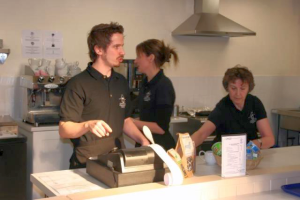
 At the heart of my role lies a conviction that being a welcome, accepting, incarnational Christian presence in the community is key to contemporary ministry. So I spend a great deal of time simply hanging out in the coffee shop, sometimes working behind the counter, sometimes tapping away on my laptop, and often just meeting friends old and new.
 Marriage and Parenting Courses. We have run a number of these courses in the Coffee Shop.
 I did msm South Wales in 2009-2010. It was timely for us to do it as Llantwit Major Benefice has nine churches, three clergy and three Readers! It gave us the kick start to do things, providing a reason to stop delaying and get on with it.
 In a new atmosphere of optimism, I started the Messy Church at St James' Wick, which I ran for its first 18 months before handing it over.
 The Bridge's worship time does take place on a Sunday, between the hours of 5 and 7. People will often come and they are surprised by how traditional it can be. We do make use of worship songs and we make use of what we call performance or presentation songs – it will involve the children right at the very beginning which often can be pretty wacky and pretty lively, they then leave for their own activities and we go into a time where we begin to look at a particular issue and focus on what the bible might be saying about something.
 We have been blessed beyond our wildest dreams by the Hinckley Methodist Circuit and its commitment to The Bridge, not only in terms of finances but also in terms of staffing.
 People sometimes ask, where does your church meet? When people now ask me that question I will think about the social worker who perhaps will be dealing with a very difficult child on a Wednesday afternoon, the person who is a gardener… there is no divide between what we claim to practice on a Sunday and what we live out during the rest of the week.
 In 2009 a group of Christians hired East Worthing Community Centre for 'a couple of weeks' to trial a café church. Now, over two years on, and an average of 50 people attend East Worthing Café Church every week. Leader John Beales explains more.
 I had been Elim trained and was previously an elder at Elim Christian Fellowship in Worthing for three years so I knew the area and people. My wife and I had no plans to start up a church at all but every time I went by the Centre it was as if God was saying, 'go on'. Right from the start, when we were beginning to pray about it, I spoke to all the church leaders in that part of Worthing and involved them in our thinking and plans. They were very supportive of us starting something there.
 Children are welcome but they have to come with either a parent or an adult and they are then responsible for them. We get about 50 people on average and roughly a dozen kids between the ages of three and 17. It's well mixed and about quarter of the people are unchurched. We also do fun activities in the half term, As an illusionist it's great to be able to use those skills in God's service by highlighting biblical truths in a way that people can understand. Our intention is not to force 'church' down their throats. That's why I also hope to develop my IllusionandTruth ministry and use it as a tool to reach out to people with the Gospel through mime, drama, illusions and escapology in a fresh, fun and creative way.
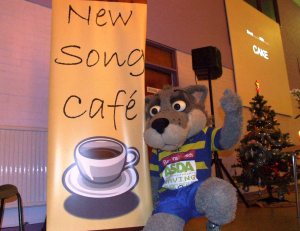
 We recently welcomed a special guest – Wolfie, the mascot for the Warrington Wolves rugby league team. People queued up to get a photo taken with him. Everyone really enjoyed that – except for fans of the club's local rivals, the Widnes Vikings!
 I love the traditional, I love the inherited but that alone is not going to be sustainable in its present form for the next 50 years. What will carry Bold Street through is the network of church communities developing. New Song has grown beyond what we ever imagined. Thinking back to the original idea for it all, we might well end up going into Costa and we have an invitation to do so but the next thing is Pub Church in a local bar on a Sunday night.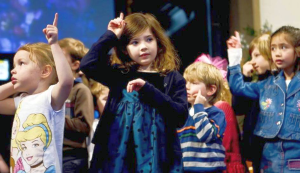
 The church building itself is on the way to a school so many parents walk past St Paul's during the week. Many mums and dads also drop their children off at our church nursery and, for quite a long time, we had seen people standing outside the church in the cold and the rain while on the school and nursery 'run'.
 When people walk in they can go and get a tea or coffee, pick up something to eat from bacon rolls and croissants to waffles and homemade cake and take a look at the Sunday papers. Everything is set up around small tables, there's music in the background and it's all very informal. For the first 15 minutes, we just let them come in and 'be' and I then welcome them from the front – but it takes a while for people to settle down!
 I then explain that people can explore the theme in more detail in various ways. We have various 'stations' set up around the church to help people to do this. A small team got the whole idea of the different stations up and running but they have now grown their own teams to develop the work.
 That all happens for about a quarter of an hour and at the end of that time we then gather everyone together again. Children who have made something show it on our big video screen and we have a final song and then a prayer. It runs from 10.30am for an hour though lots of people do hang around to chat. The response has been huge and it's teaching us a lot about church and being church because it really does attract people who wouldn't come along to the other services.
 For some people in our main congregation it has been a bit of a challenge but they can see the difference it is making. Thinking about the popularity of this form of service with families made me wonder about our context. We are in a commuter belt and many parents work really hard during the week and don't get to see their children very much because they're travelling. If they came to a standard service they would be split up again after 40 minutes when the children go off to their own activities but to have church where the family can all be together within a loving worshipful environment is a different model that seems to fit more comfortably with them.
 None of what we have done is rocket science; most churches have run holiday clubs where they have creative activities and we have done that sort of thing too. It's just putting some of these things together and creating an environment where you are willing to take risks. It's also about being prepared to have 'holy disorder' while keeping that dignity of worship somewhere in the midst of it because there is an element of control that is right and godly.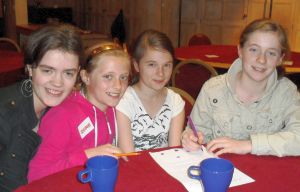
 We are committed to creating ways to worship that are culturally accessible for a wide range of people. Many find our existing worship immediately attractive, beautiful and moving. It is 'mission-shaped' worship for those people. It is growing in numbers and we aim to attract many more to it. Others though, especially those without a church background who aren't used to classical music and formality, can find it somewhat intimidating and uncomfortable. For many people today, finding their way into our worship is as foreign and threatening as going into a betting shop to place a bet would be for some traditional churchgoers.
 Parents attending the choral service can leave their children at the new 'zone' where recognised adult hosts supervise and care for them. Others come to Zone2 as a family unit.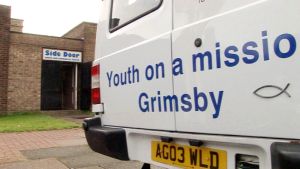
 The Side Door Youth and Community Church, featured on
 The situation will be reviewed at the end of March but, at the moment, we continue planning on being here for the foreseeable future because this is a live and going concern.
 Side Door started as a project but developed into a church. We had our outreach before we were a church, which is the opposite way round to the way it usually works. It officially remains a Circuit-based outreach more or less owned by the church. Some churches can exist without outreach. We can't. Now the outreach needs the church, they are inseparable.
 Those on the estate will, in all probability, not be moving on from there because many will not have that freedom of choice. Those people are now saying to us, 'We want to spend time with you.' The mindset has changed completely. In turn we have to be prepared to cope with ways of thinking or doing things that we may personally find difficult or strange.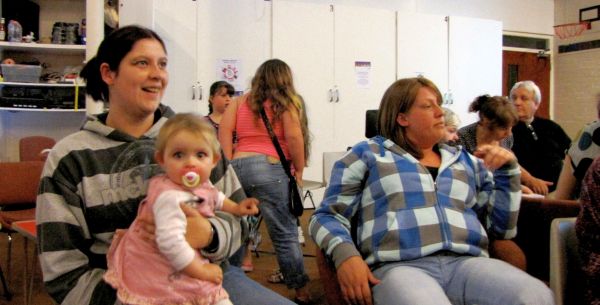

 Growing leaders and helping people to achieve their potential was something that underpinned everything. Elaine Lindridge was our leader at that time and she helped us through a major transition in 2008 when many members of the Mind the Gap – who were also involved in their own local churches and doing too much as a result – were released to go back to those fellowships.
 A worship leader will start up at about 5.30pm and we'll go through to 6.30-7. There are no set rules as to what happens but generally there is a speaker or people sharing what has been happening for about 10minutes. At other times we'll use the NOOMA DVDs by Rob Bell to prompt discussion; on other occasions we use songs and projected words.
 Those who have committed to cell have grown a great deal in confidence and are prepared to do more and more things. One example is when a homeless lady came into Mind the Gap having been to the main church in the morning where she had been given a crisis number to ring if she wanted to find a bed for the night. Instead she came to us, shared our food, and sat through a service after which one of our members said she would help to find this lady a bed. People are doing things like that through the growth in fellowship. It's key because it's about not trying to do things on an inappropriate scale, doing things that are right for our normal figures of 18-22 people rather than something more suitable for a church of 80-100.
 We are also looking forward to our first Mens' Breakfast in July when our speaker will be a man was a local gangster before becoming a Christian and a church leader. The idea is very much to try and engage with men in their 20s and 30s.