
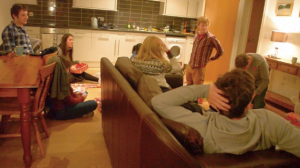
Matthew Firth and Andy Dykes tell how a dual ministry in Cumbria is affecting the lives of growing numbers of young adults.
Matthew Firth: I am chaplain to the University of Cumbria and minister of The Way church for young adults aged 18 to 30. I work full-time in this dual role, half with the university and half with the Diocese of Carlisle. They had worked together to form the job description identifying these two distinct parts of my ministry and – as a far as I'm aware – it is a unique appointment in the way it is framed.
My role with the University involves the pastoral care of students and staff; I also oversee chapel worship and provide opportunities for people to explore the Christian faith. The diocesan job focuses on the planting and growing of this new church in Carlisle with the aim of reaching out to people in what’s known as the missing generation, the 18-30s.
I'm now coming up to two years in the role. The first year was a learning curve of finding out how the University works, getting to know what had previously taken place through the chaplaincy and looking at how things might develop – and also appointing an intern. Andy took on that internship in September 2013 and a lot of the work has taken off since then, including that of our fresh expression, called The Way. That had started to take shape about a year ago and we are still in the very early stages but there are now signs of things moving forward.
 Within the field of university chaplaincy, I find that some chaplains want to reach out evangelistically but a lot don't – some because they feel a bit hampered, maybe because of a strong secular atmosphere in their universities, but others because they feel that chaplaincy is, first and foremost, about pastoral care.
It's up to individual chaplains to say that, for them, it's also about personal evangelism. For me, it was a different situation because my role was set up with a clear evangelistic aspect – it's something that I not only believe in but it was also written into my contract of employment within the dual role.
There are two very distinct roles but one person was appointed for both and it was made clear right from the start that I would be looking at ways in which we can do chaplaincy in a pioneering way.
Looking ahead, we're very much hoping that Andy's role will be able to transition into a role for a Young Adults Missioner when the internship comes to an end.
We're so grateful for all that we've seen God doing here so far, especially with the Student Dinners project. Originally started by a local YWAM team, I got involved when they decided to pass on that mission work to us as a chaplaincy team. The dinners, where food is available for £1, attract about 50-60 students each week.
Very early on out of that we did a Student Alpha Course that attracted a little group of students who said, 'What are we doing next?' They started to meet at my house and now we have The Way on Wednesday, after the dinners, so that people can get together and have the chance to learn and discuss together.
There's now a whole network of friendship and relationship where we can share life with young adults and have lots of one-to-one meet ups. I can't report major conversions but we have seen signs of God moving in people’s lives and what we have experienced is a sense in which there is a lot of digging of the ground and getting people on the journey and on the road to discipleship.
From September, we're also planning to get together on Sunday evenings to learn and worship as a church.
 Andy Dykes: I was previously working for a church in Montreal but I had been thinking that church planting was what I was called to. The opportunity in Carlisle to do work with something in its infancy was appealing. I really liked the thought of being involved right at the start of its formation. There are lots of opportunities to get stuck in and see how things progress and lots of opportunities too to be creative.
We have got some kind of solid base of students but now we're looking at the whole issue of sustainability and how this work expands to include non-students. So far our involvement with non-students has been almost coincidental. I have been trying to get to know these young adults and develop something but of course I’m employed by the University so there's a balance to be had there.
I'm trying to raise funding at the moment so that I can stay on in a new role where I can be be more intentional with non-students. I guess the plan would be to piggy back more and more on a base of student work because I feel like there is a bit of community there.
As we've been thinking about how to reach out more widely, we also have to not lose sight of our student base. It's a bit of a balancing act. A significant thing is to continue to build contact with first year students coming in because otherwise, if we neglect that, we would be on the back foot and trying to play catch-up all the time. It's vital to establish relationships with new people but keep on looking to develop and deepen those already there.
We've been looking at the possibility of getting some kind of city centre venue, maybe a café, to give us a bit of stability outside the university. Financially, and in terms of turnover of people, it may offer wider scope as we develop the work.
 Matthew Firth: One of the real challengesis to know how to take these 18-30s from not having any relationship with Jesus or the church to being convinced by the gospel and saying, 'Yes, I'm a Christian'. The Student Dinners have worked really well, and they're still at the core of what we do, but we now need to see the next stage with increasing numbers of people translating their experience into an ongoing relationship with Jesus.
There's a real mixture of people in our community. Some come from church families and know the 'language' to it all; others have very little understanding and background, with only a basic knowledge about some of the stories in the Bible.
A big challenge is to walk the tightrope that this dual role creates in that we are doing this in collaboration with the chaplaincy of the University of Cumbria. It's a Church of England foundation university but, like most public institutions, a secular approach has to be wisely worked with and navigated. We also have to be aware that a specifically evangelistic element is a new thing within the chaplaincy, so questions about that have to be creatively navigated too.
Another challenge is how this sort of ministry is perceived by the wider church. As with all fresh expressions work, you tend to get a dynamic where other local churches and ministers may not recognise what you are doing as church. I think it's important to keep remembering that the church is not the kingdom; it's the vehicle of the kingdom.
What I also have to keep in mind is that half of my role is paid for by Carlisle Deanery through the giving of local church members. I make sure that I offer plenty of opportunity for others to explore, and see what I'm doing in trying to pastor and reach out and share the gospel with 18-30s.
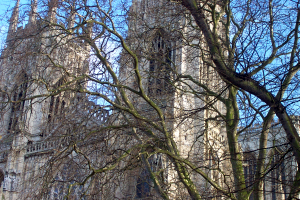
 Among the many organisations and businesses using these services were the Chamber of Commerce and York City Football Club. That model worked pretty well until about five years ago because the partners benefiting from the chaplaincy were contributing to the charity so there wasn't too much of a worry about fundraising. Those partners included City of York Council, Nestle (which contributed £34,000 pa), Terrys and Norwich Union which provided us with an office space. However, over the course of time and with changes in management, funding support diminished.
 I now help to recruit, train and support a growing number of those volunteers into chaplaincy positions. Under the umbrella of York Community Chaplaincy we now have a team of about 10 volunteers doing a variety of things. I'm also employed part-time by York St John. I have worked alongside the University's Theology and Ministry Department and very much hope to develop the chaplaincy strand as training for general use.
 I have organised a number of days to help people explore chaplaincy, one chap who came is now heading up the retail chaplaincy in York which regularly visits over 100 city centre businesses.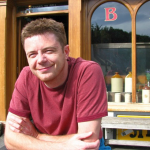
 Belfast's Titanic Quarter is at the heart of the city's regeneration. A few years ago the area was largely deserted, but a large-scale redevelopment programme is transforming it into a 21st century 'urban village'. Chris Bennett is chaplain of The Dock.
 It requires a kind of reordering of your expectations in a new way. It's a process. I was coming in with some expectations which were pretty standard parish-based ideas and it's been fun having that knocked out of me.
 The idea of yet another expression of church in a place where division and sectarianism has caused such problems in the past can be seen as not overly helpful. There are very few working models of how Christians all share a ministry other than chaplaincy – why should it not work in the Titanic Quarter? The variety of needs here is too great to ever be encompassed by one minister or even one denomination. Chaplaincy is helping us to work out shared working in denominations. It's a key that unlocks unity rather than describing my absolute mission statement.
 Clearly the Titanic Quarter, when complete, will be big enough to merit its own local church. But the opportunity runs even deeper than the chance to plant another church along existing models. A brand-new community, in a brand-new part of the city, offers an opportunity to re-envision church for a new cultural context.
 I would see our expression of church as our weekly Dock Walk where we chat about a passage of Scripture as we're on the move, or as we stop, pray, or listen to meditations or music. We use
  As part of our future plans, I also hope to get a boat – that has been the concept right from the start. Quite a few people ask us why, particularly with all of the Titanic associations here, but it feels like we are at the stage where we have done all we can do in coffee shops and a boat would give us an operational base. That means people could physically find us rather than having to rely on a website and a phone number for information.
 As for being associated with the name of the Titanic, we're all accustomed to queries as to whether it's bad taste to commemorate that link at all. In fact the view in Northern Ireland is that it was all right when it left here; it was later on when disaster struck. But for many years there was a real level of shame about it – I actually think there is something of God about the way that everything is tying together in Northern Ireland at the moment. Somehow, the Titanic, from being a thing we never much talked about, is being re-born because it pre-dates the Troubles. For all that it was quite clearly a tragedy on its maiden voyage, the very fact that it sank has stamped its name on history. Many other ships suffered tragedies but the scale of the Titanic's amazing construction makes it unique and people now feel it's right to remember the incredible expertise that went into it. That's why there was such interest surrounding the recent 100-year anniversary of the Titanic setting sail.
 The talk in the corridors of political power is all about Shared Future and Community Cohesion – redefining the existing communities and asking them to change but here we have the opportunity to create a new community that looks very different from our sectarian past.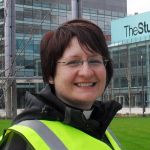
 Pioneer minister Hayley Matthews is chaplain for MediaCityUK at Salford Quays and coordinator of The Anchor, the chaplaincy's on site base. The site is associated predominantly with the development of BBC North but The Anchor serves a much wider local 'audience'. Hayley explains:
 When I saw this job description last year I knew it was 'me' but I didn't think there was any way I would get it. I was just coming out of my curacy and was very aware that there were lots of Christian people involved in the media, including many priests, who were very clued up on who's who and how the whole thing worked. I didn't even have a TV but, as soon as I heard I got the job last autumn, I bought one and got Sky installed at my new vicarage!
 When people begin to move on to the 220-acre site, owned by Peel Holdings, we will also hold some of our worship in the University of Salford building and the multi-faith spaces provided in the BBC areas.
 My job is very much about creating a sense of community. As part of that we now have a monthly film night at a restaurant in The Quays and I also arrange The Big Business Breakfast, involving the free Big Bacon Buttie, for anyone working on site to meet their neighbours and maybe even swap a couple of business cards first thing in the morning. It's for people on their way into work – otherwise they tend to get immersed in their work and don't come out too much at all.
 Before then, on June 5, BBC Radio Manchester is making its first live broadcast from MediaCityUK and I will preside while Chris Edmondson, Bishop of Bolton, preaches and a number of other local faith representatives take part. It's all a great opportunity for creating that sense of community by integrating MediaCityUK with the surrounding areas. I have been to all the Deanery churches to preach and preside so they have a contact here because it's all about people feeling that they can come on site to see the regeneration of their own area.
 A turning point for me came when the Archbishops of Canterbury and York both came to bless The Anchor and officially open the bridge which links MediaCityUK with Trafford where the 'new' Coronation St is going up. When I gave my presentation I looked out to see a couple of hundred people there and I had met them all. These are people who really care about Salford and its people and who are working hard to make MediaCityUK meaningful to everyone.
 I'd rather see a catholic, incarnational, charismatic encounter that supports people in developing a rhythm of life that they can take with them into their own routines. This new monastic approach is the direction I'm going in but I'm still at the discerning stage because the commercial outlets aren't open and the people aren't here in any great numbers as yet. It's important for me to have an idea of the ebb and flow of MediaCityUK on a day to day basis.
 Just over a year ago Colin Brown moved to Cornwall to start a fresh expression of church amongst the artistic community. It's a slow, steady task but one Colin, Church Army and the Diocese of Truro are committed to.
 And it is quite a list: "How do I follow God's lead in this? Where do I put my energy today? How do I go about meeting people who don't go to church and help them to become aware of God in their lives… in their art? What might church look like for them, and what part do I play in developing that?"
 Colin is at the stage of building community amongst those he meets. It is something which he believes he needs to take slowly and gently, and is grateful that both Church Army and the Diocese of Truro, who support him, agree. "They have given me the freedom and the permission to be here, as an artist amongst fellow artists, to be inculturated in the artistic community, and to be accepted".
 "I know that in this particular moment I need to be faithful to my sense of where God is leading me, but it may be that it all just fizzles out. But I know that I have been true to myself and I know God is saying to me 'Colin, enjoy it, enjoy the journey and don't think too much about what is going to happen tomorrow'".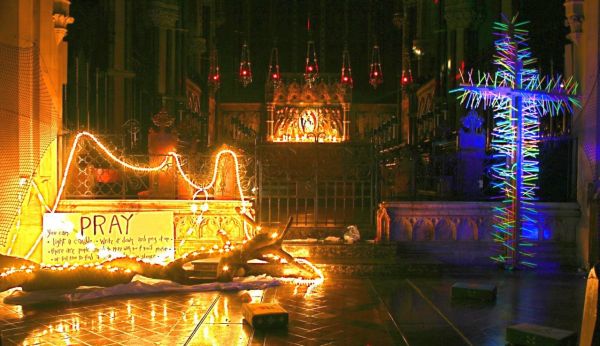

 A main focus of the work is to provide a listening ear and a helping hand to those in the club scene. We also have people going out on the streets to show kindness and love to the clubbers, and anyone else who may need some support.
 Girls will often arrive in their stilettos and hot pants, kneel down at the front and cry, pray, hug their friends and then walk out without saying anything, but they’ve had some sort of encounter with God which is just incredible.
 What we do in Nightclub Outreach Work is express our life in God in a different way. A lot of us have previously been members of various churches but this work is more about community – we just want to live life together, eat together, pray together, and get involved in social action with Worship, Word, and Witness.
 Some of the things that happen are quite bizarre. A guy working on the door at a club in Boscombe jeered at me that I looked like a famous porn star called Ron Jeremy. All of his mates laughed, I did too (with slight embarrassment). I then got a call and had to head back to my car to collect a ticket for someone. On the way I realised I had a 'Jesus Loves Porn Stars' Bible in my car and recalled there was a story about Ron Jeremy inside.
 We don't discourage people from going to traditional churches. If people want to find God there then we'll take them along but the fact is that we view ourselves as church. We love God and, as people meet with us – whether it's in a nightclub, out and about, or in someone's home; God is in the club, God is in the home, God is in the streets, God is everywhere.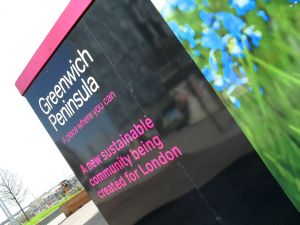
 After many years of working in the area, Greenwich United Church (United Reformed and Methodist) has started a fresh expression of church on the Greenwich Peninsula. SACRED explores the sacred in body, mind, heart and spirit. Revd Martyn Coe explains more.
 We meet in Millennium Primary School on Wednesday nights for about an hour-and-a-half and have a four weekly pattern encompassing worship, reflection, thinking creativity and symbolic action. We look at Heart – looking inside ourselves; Body – worship reflecting on the whole body of Christ throughout the world; Spirit – communion influenced by the Iona Community and Head – using a DVD study course to explore faith.
 There is undoubtedly pressure on developers to keep to that deadline – otherwise it will still be 3,000 parking spaces by 2012. That wouldn’t look too good with the world's cameras trained on London!
 We are looking to welcome to people when they move into the area, a sort of drop-in facility. As part of that we are in talks with the local authority and the Scout District about starting Beavers and Cubs to meet immediately before SACRED.
 We also need to be aware that in many of these new developments what looks like public space may not be public space at all. I may think I'm on public property because it's an open, green area but I could be asked to leave it because I am actually on private land.
 We are talking about offering daily prayer there in the middle of the day. Everyone involved is hoping that it will work together but we have been very, very clear that what we are doing is a multi faith activity rather than an inter faith activity. We are people of faith working alongside each other for the common good.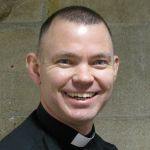
 A fresh expression of church that is 'fuelled by coffee'… Matt Ward, a chaplain at the University of Leeds, takes us behind the scenes at Emmanuel Café Church.
 Café Church operates in 10-week bursts during term-time. Obviously, as we operate in a university environment, we always miss the major festivals. That's a bit of a challenge for a church community… but there are still ways to celebrate 'together', even when we're not in the same place at the same time.
 Every year has seen quite a sense of growth in the life of the church, and in the lives of those who have come and found faith or confidence in their faith. My hope for the future is that Café Church continues to be shaped in a way that serves the needs of the students who come in and reaches out to students who don't. If it looks the same in 12 months as it does now, it won't be doing that.