
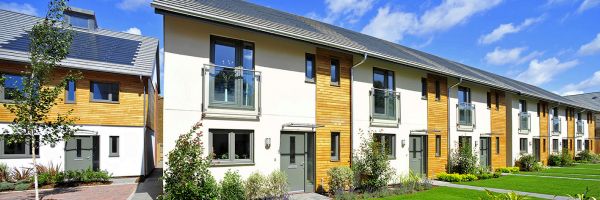
Graylingwell Chapel, in the centre of an 85-acre former hospital site in Sussex, had been derelict for years when Steve and Sarah Flashman first saw it. Now – as home to Immanuel Church – it's on course to be the spiritual heart of a landmark eco-friendly housing development. Ministers Steve and Sarah discuss the turnaround in fortune.

Immanuel Church was actually born fifteen years ago, long before we were on the scene, when a group of people in Chichester started meeting in someone's home. The church soon grew and people felt that God was calling them to work in partnership with St Paul's Church in the Winterbourne Road area of the city. Meeting at St Michael's Hall, the church outgrew the facilities there and after a long period of consultation and negotiation moved into Graylingwell Chapel. The idea was to create a vibrant new community base open to all.
Immanuel Church at Graylingwell Chapel is not a Parish Church. We are in the parish of St Paul's, Chichester but we are becoming a Bishop's Mission Order and have been given a special brief as a 'network church' and 'missional community' to live out our Christian faith in ways that connect with people in this area. This means we can develop new forms of church whilst respecting Anglican traditions.
 Seven hundred homes will be built on this site over the next seven years. Graylingwell Chapel had been disused for eleven years by the time we first saw it; previously this late Victorian building had only been used by staff and patients of the NHS hospital here.
We came to Immanuel Church as ministers four years ago to live on the Winterbourne estate which is a mix of social housing and student lets. We chose to live on the estate because we felt it was really important for us to be incarnational and live with the people we serve, our home is right by what is currently a fence surrounding the Graylingwell site. It is possible to see the Chapel from where we live – though it was a bit difficult to do that initially.
When we first drove up to Graylingwell, the whole area was a mess and you couldn't really access the chapel building at all but we managed to make our way through the foliage to get to it and we could see the vision even then.
 As a result we started to establish a relationship with the developers, Linden Homes, and also got in touch with the architects and the site's owner English Partnerships (which became part of the Homes and Communities Agency in December 2008). A public consultation was held before moving forward with the development and some 200 people came to the site's old theatre building.
Plans were outlined for what will be the UK's largest carbon neutral development. All the homes are planned as energy efficient with heating supplied by a central heating and power plant as part of an on-site energy centre. The idea is that it would be a benchmark for future sustainable developments across the country.
The architects put up big sheets of paper and they asked us all to write our own dreams and visions for this site. We wrote that our dream was that Graylingwell Chapel would become the community's spiritual heart.
Later, during the consultation, the development team stood up in front of this packed crowd and said that when first researching their design ideas, they came to Chichester and could see the centre of the city was in the shape of a cross with roads from north, south, east and west meeting at the Market Cross near the cathedral. They had then drawn a line through the centre of a map showing the Graylingwell site and discovered – from aerial photos – that the Chapel building was at the centre of it all. They then said they hoped it would become the spiritual heart of Graylingwell and they drew a heart around the Chapel on their PowerPoint map.
 We were astounded that they used the same phrase as we had written down a little while earlier! The image of the heart has since become the church's logo.
The developers and architects also emphasised that they wanted to connect Graylingwell with Winterbourne, saying the communities needed to be interwoven. To illustrate this they drew a line to show where the cycle paths were scheduled to run – one was a direct route through what had been an old orchard from our front door directly to the chapel door. We took it as such an encouragement that this was definitely where God had called us and wanted us to be.
It helped us in developing relationship with all of these key people that we could point to the community work we were already involved in. Our Winterbourne Wonderland event on the streets of the estate involves games for the children, refreshments, food, a live band and a specially built grotto for Father Christmas.
And in the middle of the summer, we bring the seaside to Winterbourne Road with our Summersdale Seaside Special. We bring in sand, a huge Hawaiian backdrop and 'beachside' cocktails. Apart from the street parties, we also run a fellowship group in an elderly care home; have a social outreach clear-up group, and lots of other things.
There is no focus to the community around here. We only have one shop on the estate and it's the place where people meet – and kids loiter outside. At the time of building relationship we knew we couldn't develop a geographic focus but we could create a focus for something good. It was, and still is, important that the community feel they can 'own' what we do. Thankfully there has certainly been proof of that along the way.
 When we moved in to the chapel building in Easter 2010, all the church turned up to clean the place and we came across a lady we didn't know doing the hoovering! It turned out that the church had helped her to clear and tidy up her garden and she wanted to give something in return.
We also have a New Community Rock Choir. Fifty eight people signed up for it and only a handful has any link at all with church but this is most definitely 'their' chapel.
The fact is that since moving in here we've had one miracle after another. Linden Homes put in a temporary electricity supply but didn't have permanent lighting. Then a member of our church was driving along when he saw lights being put into a skip. It turned out a school was being refurbished. He asked if he could have them for the church and he drove off again with all the lighting we needed.
A couple of weeks before we were due to move in, it was suggested that we might have to pay £10,000 a year to use the place! Some of our people were not at all sure about continuing with the whole thing but we said, 'This is the vision that God has given us and we will still move in on Easter weekend. If He wants us here, he will provide what we need.' The Monday before moving day one of the directors of the development company contacted us to say, 'We have decided we are not going to charge that figure. For the next two years you can use it for £1 a year.'
 We are developing relationship as well as developing trust both with the community and those involved in delivering this scheme. We were able to put together quite detailed business plans for what was then English Partnerships and this really helped them to recognise that we were serious about the whole thing.
The idea of denominations or different streams of church is completely incomprehensible to many. If you mention to a lot of people in this area that we are from the Church of England, many wouldn't really know – or care – what that means. If people do have a view of what Christians were like, it would tend to be a stereotypical one of 'wet fish handshakes' and blue anoraks. There is no expectation of anything different.
It was at the Bishop of Chichester's invitation that we started on the route of becoming a Bishop's Mission Order. There had been difficult times before Immanuel Church was formed, its beginning was born out of pain, but Immanuel wasn't formed as an alternative to another congregation. Its growth was very organic and developed naturally. It had also always remained within the CofE's Canon law so the BMO offered an opportunity to embark on a new stage of Immanuel's journey.
Immanuel Church, in all but its direct governance, is sympathetic to the CofE and the BMO acknowledges that some churches are seeking a form of official recognition that falls into the Order's bracket. It’s all about restoration, reconciliation and healing.
 We are very missional with Graylingwell and since we have moved here, the culture of the church has significantly changed. About 120 adults are now part of the church with attendances of roughly 100 on Sunday, plus children. We're now praying for new growth from people coming in as converts and there are good signs for future relationship building. Linden Homes has set up a Community Development Trust and a community development worker is using the Chapel for parties for new residents. Our youth and children's work currently takes place in a double decker bus parked alongside the Chapel. We bought it on eBay and later this year we do hope to go on the road with it.
The building itself will be restored by Linden Homes at an estimated cost of £300,000. They will start to do that when 150 houses have been built – 70 have gone up so far. We will remain in the Chapel while works continue, all of which will be in line with the carbon neutral development around it.
In thinking about the fresh expressions way of being incarnational in a setting rather than being attractional and bringing people back into a church building, it's all about knowing your context. For us here we recognise that one of the things that draws people in is the Chapel itself because they are curious to see what it's like. You can't always work to a formula of getting out and staying out. Many are coming to the church because of its community arts emphasis. You have got to know your own community and recognise where people are at as well as having a real Spirit-inspired vision.
 Graylingwell Chapel is the new community venue in Chichester but we can see a time, as the site develops, when additional communities could well become those little churches that are very typical of fresh expressions. This might be seen as 'Chapel Central' to a network of churches.
We still find it amazing that it was the secular community of architects and developers that set Graylingwell Chapel's agenda as the spiritual heart. They want to create something that is very contemporary, very alive. In turn, people have picked up on the welcome, the friendship, the atmosphere of the place. It is easy to become concerned that they will be put off by liturgy, the way we worship, what we say in a sermon or whatever but we shouldn't assume that these things are barriers. Instead, friends and friendship are often the keys to them coming in the first place and then coming back for more. We have got to live community and give people a glimpse as to what that means – that's the heart of the Trinity after all isn't it?

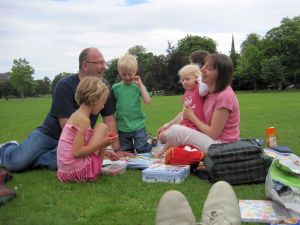
 Formerly Priest in Charge at St Mary's, I have been here for three years with the first being taken up by testing and seeing. Two years further down the line and there have been some really encouraging things along the way, not least the development of Kairos, but now we need to try and embed a new vision and work out how it looks to be in a way that's centralised – yet decentralised. We're in new territory here so things take time – but that's fine.


 Ecumenical relations are very important to us and we welcomed quite a lot of church leaders from the area to our launch in October. Among the denominations there is a great deal of understanding and we get a lot of support as a deanery initiative.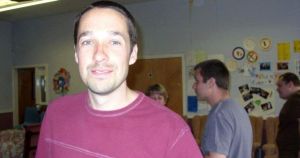
 Church Army evangelist Captain Andy Milne first launched Sorted in 2004. As a keen skateboarder he got to know the area's young skaters, many of whom went on to become founder members of the youth church in north Bradford. Now skateboarding is just one of many activities they enjoy every week, explains Andy.
 Fridays will see us have a testimony, short talk for about five minutes and then different activities in the various rooms. Last year we asked the young people what they wanted to do at this session. We have to be facilitators in it – otherwise they are going to get bored. There's quite a wide age range for this one, it's about 11 to 20, and the older teens run it with some adults as well. We can get 40 or 50 people coming to that.
 When we started, one of the ways I was able to build relationships was through the skateboarding but it's quite a small part now. It has been good to see a lot of young people come from very different backgrounds to be part of this and I have been privileged to witness young people having experiences of God on a Monday night, come to faith and develop into leaders and disciples.
 There was a real sense that God was asking us to go there. Then one lady had a picture of God giving us a key, opening up something that hadn't been open for some time. People were amazed when we were then invited to go in. As a result we started working with youngsters there and developing groups. We now see about 30 young people every week in Sorted 2. It’s a massive thing for us.
 That could clearly be seen earlier this year when six of our teenagers were baptised by the then Bishop of Bradford, Rt Revd David James, in the River Wharfe. A further five then joined them to be confirmed and take Communion by the side of the river in Ilkley. We find that the young people often have an experience of God before they follow him. Rather than a gradual intellectual process, they often have an encounter with God and begin to make sense of it later.
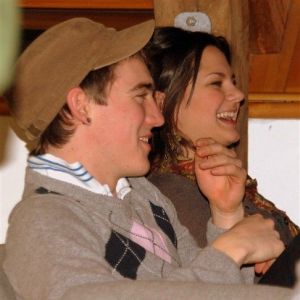
 Jon and Jo Soper tell us the story of Exeter Network Church, in the Church of England Diocese of Exeter. This network church is soon to make history as one of the first fresh expressions of church to become a Church of England Bishop's Mission Order. Jon and Jo explain all.
 Many networks are social networks where you bring friends – salsa, surfing, poker; some are social action networks, such as the team which visits Dartmoor prison once a month; some are age related (children, teenagers, young adults); some are orientated towards discipling Christians, and a few are geographic, such as 'God and Chips', who showed Alpha DVDs in a chip shop during opening hours.
 At our last event we held a 'big giveaway' (instead of selling) at the car boot sale, which gave rise to interesting conversations, as well as having a team of people praying for people in the high street, cafes, and another team going to the prison. Some in ENC use 'Edge Sunday' to do their own personal blurred edge activity, like inviting their neighbour round for lunch which they have been meaning to do for months.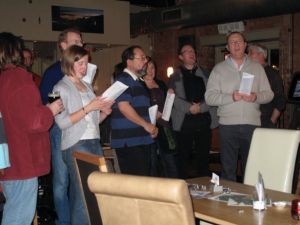
 It all happened very quickly. I started in post at the end of May 2009, discussions took place over the summer to sort out the BMO, and it was signed in December at a Beer&Carols event. We certainly reaped the benefits of the hard work that other BMOs had done before us in Exeter and Thanet.
 In the middle of the BMO area is The Quay, a canal side pub which was itself part of a regeneration project a few years ago. It is now the base for Presence's midweek meetings, and some of those at Presence have become regulars at the pub’s open mic session on Thursday nights.
 The regeneration of great swathes of the city means that new communities have become cut off from parish churches because the landscape has shifted, but by starting a fresh expression alongside those churches, we can redefine a pastoral boundary. It has just worked brilliantly in that it's possible to run a straight mixed economy which lets the existing parishes do what they do while we look at how we use these places in new and creative ways.
 This is a minimum 10 year project, and part of the challenge is that the landscape will continue to change dramatically during that time. Large brownfield sites in our area are set aside for new developments but are yet to be built on, so we need to be flexible in our approach and planning.
 We also very much hope to be involved at The Quay on St Patrick's Day. There are lots of possibilities but we might look at having a religious 'bit' followed by Open Communion using Naan bread – reflecting the type of area we're in. We want to reclaim these celebrations for God, and show that we're a church of festival and fun.