
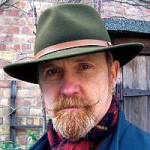
 Tony Cant warns not to lose sight of the wood for the trees.
St Luke's-in-the-High St, Walthamstow, is a missional church that has transitioned itself from traditional church. Our building is closed for worship, and is now for sale.
We don't meet for church on Sundays, but instead I manage the weekly Farmers' Market in Walthamstow High Street, at which the church runs a community stall, and therefore, are, in the real sense, a church without walls. We get together for reflection, prayer, Bible study and worship on Wednesday nights; our sense of liturgy and teaching is very conversationalist and hardly ever didactic; we share Holy Communion together each Wednesday night; and we eat together on a monthly basis.
An old friend of mine, John Smith of Christian mission and youth outreach association Concern Australia, uses the image of a tree to give some shape to thinking about how trad/inherited church and fresh expressions are part of the same organism. The growth in a tree happens right at the edge – the bark layer. You can kill a tree by ring-barking it; ie, cutting a ring of bark about a foot wide right around the tree and removing it, as the sap that is the lifeblood of the tree runs through the bark.
 Now, while the bark is where the growth is, it can't exist without the wood of the tree that has formed the trunk throughout the whole life of the tree. The bark and the wood need each other to become a living tree. We, as a fresh expression of church, need the structure of the traditional church/CofE to support us while we grow some new wood at the edge of the tree. But if we are cut off from the tree, the tree might stand for a while longer but the life will be gone – you can see where the metaphor goes.
At St Luke's, we do participate in the life of the wider church by attending the Bishop's Council, Diocesan Synod, Diocesan Mission and Pastoral Committee, Deanery Synod, and Clergy Chapter, as well as being an integral part of the Parish of Walthamstow Team. The traditional structures have been positively instrumental and supportive of what we're trying to do, and have not tried to subsume us. In effect, we have been blessed by those structures.
It's a complicated business that we're involved in, and has all manner of implications including long-term sustainability issues. Let's hope we don't lose sight of the wood for the trees.
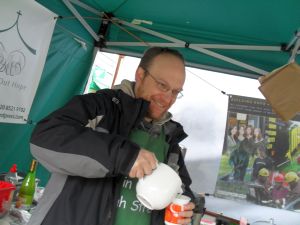
 St Luke's-in-the-High-Street focuses around the weekly Walthamstow Farmers Market in north-east London. It is one of 40 Christian churches based in Walthamstow but team vicar, Revd Tony Cant, says it is a unique form of missional experiment in the diocese of Chelmsford.
 St Luke’s-in-the-High-Street is part of The Parish of Walthamstow Team, which also includes St Gabriel's, St Mary's and St Stephen's. The churches all work differently, complementing each other in working for the common good and helping to shape the future for this area.
 As part of their discipleship in building their own faith, St Luke's meets at one of their members' homes on Wednesday evenings for reflection, prayer, Bible study, worship and Holy Communion. And the last Wednesday of the month is given over to enjoying a meal together.
 Tony says that some weeks St Luke's members find themselves simply huddled in the stall, looking out at the driving rain, and wondering just quite what it is that they are doing. Yet on other occasions have had hugely significant conversations with stall holders or customers about life, the universe and everything. Both extremes are expressions of love; both dependent on a willingness to be present; and (much more importantly), both resourced by the true source of all love that they have been grafted onto.