
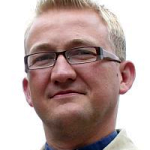
The Sunday Sanctuary (Mark Rodel)

Mark RodelMark Rodel describes The Sunday Sanctuary.

One month into our great adventure in Portsmouth. What has been going on? What have we learned?

On 22nd November, the tiny congregation who met in the parish church building of St Luke's, Southsea, said goodbye to that place. In a special service, we moved around the building, stopping at various points – the main entrance, the font, etc. At each 'station' we marked some feature or character of the church's life, symbolised by that particular piece of church furniture. We committed ourselves to carry that aspect of our common life forward into our new future.

Why did we do that? Because from then on, we were putting a stop to the 11am Sunday service in the church building and instead meeting in the community room attached to a nearby tower block. But it's not just a matter of geography. We haven't moved our Sunday service of Anglican liturgical worship. We've ended it.

The time for the intentionally Christian community's worship is now on a Tuesday evening as part of our home group. Each week we share a meal, a Eucharist and prayer and engagement with the Bible in my home.

On Sundays, between 10am and midday, we now open what we're calling the Sunday Sanctuary.

We provide breakfast and refreshments all morning and some sort of craft-based activity. Alongside that, we also offer one or two light, reflective activities. We've been describing it as a family drop-in in the publicity material. Is that what it's been?

We're not expecting people to come to us and do what we do without space for question or doubt or just exploration in conversation

Already, we have experienced a steep learning curve. I anticipate that our Tuesday night gatherings will include some lively conversations from now on! The first surprise was that people stay all morning. We had been working on the assumption that people might come for 30 or 45 minutes and then go. One or two craft activities are sustainable for that length of time, but not if people are there for two hours. So we are having to think pretty rapidly about creating a broader range of things to do.

But at the forefront of our minds is the need to ensure that all we do is intentionally spiritual. It would be easy in lots of ways to resort to 'entertainment', but we aren't a youth or kids' club. We're a church operating a family drop-in. We're not about forcing anything on anyone. Everything is optional. But everything we offer comes from who we are – ourselves and our faith.

The difference between what we're doing here and a regular church service is that we're not expecting people to come to us and do what we do without space for question or doubt or just exploration in conversation. The activities we offer share some of the things that we have found meaningful. They invite others to imaginatively enter into that world of meaning – to 'try it on for size'. But we will always respect people's freedom and if they find themselves taking a different point of view, it will not affect our welcome of them. Watch this space…
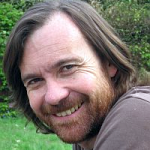
Dismissing the crowds (Robert Harrison)

Robert HarrisonRobert Harrison reflects on Jesus dismissing the crowds.

December is a time when we prepare to meet the needs of the crowds who flock to the Christian story over Christmas. It's relatively easy to get a crowd over Christmas, and so often have I asked myself: 'How can I keep this crowd? How can I entice these people to come back to church more often?' Equally often I have looked at the numbers entered into the service register with a contented smile on my face.

I have not been thinking like Jesus.

Jesus welcomed the crowds, he taught them and he healed them, but then he dismissed them. He never invited them back or suggested that they return to him. He sent them away and got back to the important task of teaching and training his disciples, trusting the crowds to God.

After being told by the Pharisees that he was attracting a bigger crowd then John the Baptist (John 4), Jesus left the area – I would have stayed for more 'success'. After the feeding of the five thousand (Mark 6), Jesus dismissed the crowd, and moved on – I would have been on that same hillside the next week and the week after, while the crowd slowly dwindled.

We need to sit lightly to the crowds and resist being seduced by rising numbers

Wherever it is that we welcome our crowds this Christmas, we must remember to dismiss them afterwards. It is not in the example of Jesus to try to hold onto them. If our mission-shaped church is to have a Jesus-shaped mission, we need to sit lightly to the crowds, and resist being seduced by rising numbers. Yes, we must welcome the crowds and teach them. But we must also dismiss them.

That leaves the question: what do we do with these crowds when they are with us? In a Jesus-shaped mission, we will tell them stories – wild stories, crazy stories, funny stories, but stories that are laced with the 100% proof love of God – and then dismiss them. In a Jesus-shaped mission we will send them back to their homes, not with answers but with questions, not with understanding in their heads but with the love of God in their hearts. And, finally – if we really want to be like Jesus – we will do so without ever asking them to come back.

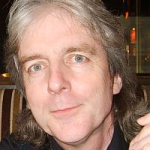
Woman-coloured spectacles (Lucy Moore)

Lucy MooreLucy Moore puts on her woman-coloured spectacles.
When I was asked to write up my thoughts on this subject, I thought I'd scan through the previous blogs to get an idea of length, style, need for wit, wisdom, searing theological insight, blah blah… and got as far back as the last 25 posts before I realised that only 5 of those 25 are written by women. In fact, casting your eyes back through the past 10 blogs, you'd be hard-pushed to see that women feature at all in fresh expressions. Does this matter to you? How would someone outside the church perceive fresh expressions as an organisation if they read the same part of the website as I did? More importantly, how would they perceive Jesus if we're his reflection, his ambassadors? And is this bias typical of fresh expressions as a whole?

It can't be that women don't blog. It can't be that women aren't reflecting on fresh expressions as they lead them and belong to them. It could be that this 'one-fifth representation', together with the lack of women represented at the core of fresh expressions, is symptomatic of something deeper that needs addressing – and not just by women themselves.

You can get spectacles that filter out colours and force you to see the world in a particular way. If you put on metaphorical spectacles and look at the world through the eyes of gender equality, it soon becomes apparent that in fresh expressions / church planting / emerging church leadership there is still a huge gender imbalance. Sorry. I didn't want to believe it either as I love fresh expressions, but there it is. And yes, I feel very uncomfortable about raising this point as I want to get on with the fun of Messy Church, not get sidetracked into being labelled a bra-igniting Woman's Hour feminist, but who will raise this issue if I don't?

The lack of women represented at the core of fresh expressions is symptomatic of something deeper that needs addressing

No, I don't like wearing these spectacles, also because I soon become unable to see more important issues as I'm too distracted by gender questions (so busy fuming at the lack of female speakers, lack of stories from women leaders, the lack of pictures that show women as well as men, and so on), that I find I haven't listened to the wisdom of my male colleagues – you get the picture.

But if we, as practitioners of fresh expressions or more simply just as Christians, are concerned with justice, reaching the marginalised, giving outsiders opportunities to grow in faith, surely we should be doubly conscious of injustices in our own front room and challenge each other to right these easily rightable wrongs – from the point of view of witness to the rest of society if nothing else! And how much more gracious it all becomes if those calling for justice are not the ones being marginalised; how much more powerful it would be if it was a man writing this blog? (Ah, no, that would make it 5/26.)

At a seminar recently at a church planting conference, Penny Marsh and I were asking the question: 'Is church planting just for blokes?' We managed to lure two genuine blokes in to join the women. (How? Cake.) Between us, we came up with a lot of meaty ideas as to the possible causes for this perception and possible responses to the state of play.

Language, history, culture, having babies, leadership styles, structural blind spots and more come into it. Do have a gander.

And now, stamping on my smouldering underwear and grubbing around in the ashes for a pair of contact lenses, I shall return to the messiness of my real passion.

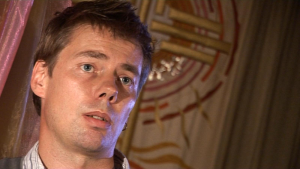
To maturity and beyond (Martin Keenan)

Martin KeenanMartin Keenan goes to maturity and beyond.
What does it mean for a fresh expression of church to become mature?

Looking at this subject I thought about a word that in many Bible translations is translated as 'maturity', but in other translations is translated as 'perfection'. The Greek word in question is Τēλιος. Its basic meaning is 'the purpose for which a thing was designed'.

If a watch is τελιος it keeps perfect time; if a human being is τελιος, he, or she, is holy. But what does it mean for a church to be τελιος?

What is maturity?

What is the purpose for which the church was designed?

When is a fresh expression of church τελιος?

The purpose of fresh expressions is to reach people who are beyond the reach of inherited church. The reasoning is that we are in a missionary type of situation. So if we view the UK as a mission field and fresh expressions of church as the mission movement, how do we judge maturity?

Rufus Anderson and Henry Venn came up with the idea of the 'three selfs': self-government; self-support and self-propagation. A fourth self was added by David Bosch: self-theologising.

By that standard, a fresh expression of church is mature when it runs itself. It is self-governing. That doesn't mean when it has a fully functioning PCC or church council, complete with wardens or stewards or whatever. It's hard enough for inherited churches to find people to fill those positions. What it means is that there is a committee of sorts that is running the church and it has been recognised by the sending church as being grown up enough to make its own decisions – even if it makes a few wrong choices. The formerly unchurched are now running the fresh expression.

Self-supporting means that financially it can stand on its own feet. This doesn't lead to independence. It leads from dependence, through independence, to interdependence.

But it is mature when it is paying its own rent; providing its own resources, but maybe still receiving gifts from its parent(s).

I think there is no one answer to what maturity looks like, but I don't think it is achieved by giving up the purpose for which the fresh expression was intended

And self-propagating! Have we got that far yet? Do we have fresh expressions of church starting even fresher expressions of church? 'The life cycle of all living things includes the creation of the next generation' (George Lings). Of course reproduction doesn't happen until a certain level of maturity has been achieved.

Then there is David Bosch's extra: self-theologising. We don't create our own doctrines, but we do need to become contextual theologians – interpreting what God is doing in our context and applying ourselves to that.

Steven Croft, in the early days, talked about going from 'fresh' to 'stale' expressions. I have come up with an alternative. In East Sussex there is a little village with its own Anglican church. The village is called Ripe and the church is called 'Ripe Church'.

I like to think in terms of τελιος. What does it mean for a fresh expression of church to fulfil its purpose?

Does it mean settling down to conformity?

When we have enough people to call ourselves 'proper' church is that when we are mature?

Or are we mature when we have achieved the three selfs? We can sustain ourselves, but we are still maintaining our purpose of reaching people who are beyond the reach of inherited church.

I think there is no one answer to what maturity looks like, but I don't think it is achieved by giving up the purpose for which the fresh expression was intended.

Maturity in fresh expressions of church means that we are doing what we set out to do and we are doing it better. In the process we have become self-governing, self-supporting, self-theologising and, hopefully, self-propagating.

A way forward for selecting and training pioneers (Jonny Baker)

Jonny BakerJonny Baker seeks a way forward for selecting and training pioneers in an extract from his blog.
as a result of the recommendations of the church of england report mission-shaped church two changes were introduced around leadership. one was that a new criteria for selection around mission was introduced (phew – how was that not there before?!). and secondly a new designation for ordination was introduced – ordained pioneer ministry. this was to recognise that the current challenges in the church and encouragement for newness would require different kinds of leadership. the pastor/teacher sort of leader is probably the one that has been recognised the most with people trained to lead parish churches. but starting something from nothing, reaching new communities, developing new projects, working beyond the edges of the church and so on is something that requires a different kind of person and gift/skill set. pioneer is the term that has been settled on. it's been in place 3 or 4 years now and colleges and regional courses have got in the mix to varying degrees offering training to ordained pioneers. there is currently a review of how that is going. i think it's not news to say that it has been mixed – institutions that have been geared to training parish priests for years and years have not found it easy to rethink how training might work for pioneers. and there is also a challenge around recruiting and recognising this sort of a person/potential. it's early days of course and it's amazing that an institution that has as much history and weight as the church of england has adapted so quickly.

i guess you can see where i am leading with all this. cms has been involved for 200 years or so training pioneers in mission (who in years gone by have helped birth two thirds of what is now the anglican communion! and in recent years are connected with lots of indigenous mission movements round the world). so we have been speaking with ministry division of the church of england about the possibility of getting involved in the mix of training pioneers. this has been met with great enthusiasm – so much so that i confess i have been completely amazed. they are now working with us to help us become a normative pathway for training ordained pioneers along with other colleges and courses. and yes yours truly has the lead at the cms end on this. it's a big task ahead and i am both daunted and excited at the prospect.

the training for pioneers will actually not be solely focused on ordained pioneers which i personally think is really healthy. we train people in mission anyway and have pieces like resource in place that we will use as modules of the training. so ordained pioneers will be in the mix with other mission leaders.

the training we do will be totally geared to pioneering in mission with creativity and imagination and will be shaped with and by pioneers rather than pioneering as an add on to existing training for being a parish priest

the other piece that is pretty interesting is selection. again we are working with ministry division to see how we can work with them to develop processes of selection. we already have good and thorough processes for selecting people in mission so adding the pioneer selection in the mix is part of the new challenge and then integrating how that works with the church of england. because we are an ecclesial community with a visiting bishop it means we can engage in this in new ways we think/hope/expect!

lots to be worked out, huge challenges ahead, plenty of change and opportunity. i can't give you the exact shape of the training, a curriculum, a prospectus or even a full process yet. i don't want to nail it down too quickly as i think we need to be as creative and imaginative as possible at this stage. but i can promise that the training we do will be totally geared to pioneering in mission with creativity and imagination and will be shaped with and by pioneers rather than pioneering as an add on to existing training for being a parish priest (priest plus as it's been called in certain circles). if you have thoughts, ideas, interest, wisdom, connections let me know. if you are a pioneer or thinking of doing that be a guinea pig with us!

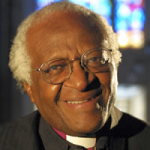
God is partial to young people (Desmond Tutu)

Desmond TutuDesmond Tutu explains why God is partial to young people, in comments from a press conference he gave in Sheffield this month to launch the global gap-year programme, Xplore, for young people aged 18-25 (used with permission).

As an oldie I have increasingly been wowed by young people. I have often been annoyed with you media people for really not being fair. You write banner headline stories about young people who go wrong. You hardly ever write stories about the many, many young people who do fantastic things. I just say, what is amazing is not that some young people go off the rails, make wrong decisions; what is so amazing is that not more of them in fact do that.

Just think now how young people can access the internet and I'm told there are some very, very 'interesting' things on there. They can access anything, and to find that we have young people who can still be so wholesome. I think of young people who could very well have stayed in their countries living comfortably. I've been to quite a number of poor countries and your breath is taken away completely by the number of young people who leave their homes and go and work in these poverty stricken places.

Now here we have a programme (Xplore) that says it wants to prepare young people to become what God wants them to be, because as you know we have a God who is extraordinarily partial to young people, using a Joseph, a David to fight Goliath, a Jeremiah, Mary the mother of Jesus. God constantly using young people.

Don't allow yourselves to be infected by the cynicism of oldies like us. We've made a mess of the world, and we're leaving it to you and know that you are going to help change it.

When we were fighting against apartheid, the people who supported us most of all, not exclusively, but the people who supported us mainly were young people, the students at universities, and it's been so ever since.

You think of the Bonos and all of those people who say: 'Let us make poverty history.' Young people have been passionate in the support of that campaign. Young people are passionate in their support of a world that knows war no more. And here we have a fantastic programme that wants to prepare young people for exposing to their contemporaries the fact that God loves them, that they are very special to God, that God loves each one of them as if they were the only person on earth. Isn't that fantastic?

And these young people, and all of the others who are going to be part of this programme, are saying: 'For us it's not just a gap year where you go off and do something and return to do what you had already decided you were going to do. For us, it's a year that may turn our world upside down.' In fact, many of those who have gone on this programme return totally changed and want to do things they had never believed they would have wanted to do. So turning the world upside down for God is what Xplore says.

So we want you to know too that God gives up on no one. There isn't for God a hopeless case. No one is a hopeless case. No situation is irredeemable. Most people would have thought that South Africa before with apartheid was a totally lost cause. Well, it produced Nelson Mandela and did some very strange things. And look at Northern Ireland. Who would have believed that you would have seen Martin McGuinness and Ian Paisley talking together on television.

So we say to these young people and to all of the others who are going to be part of this programme: go on dreaming. Go on being idealistic. Don't allow yourselves to be infected by the cynicism of oldies like us. We've made a mess of the world, and we're leaving it to you and know that you are going to help change it.

Cinema: life through a lens (Michael Johnson)

Michael JohnsonMichael Johnson looks at life through a lens.

'No-one likes to be preached at any more.' So said a panel guest on a recent Radio 4 discussion. Even so, few of us are oblivious to the big questions of life and the world in which we live.

In the 1998 movie, The Truman Show, the main character Truman Burbank asks the question: 'Who am I? Was nothing real?'

This is perhaps a question that all of us ask at some point in our lives and – like other philosophical and spiritual questions – it has no easy answer. Many films, directly or indirectly, ask philosophical, spiritual, ethical or moral questions. They reflect issues concerned with the meaning and purpose of life – the kinds of questions with which philosophers and religions have grappled for centuries: Why am I here? Why is there injustice and suffering in the world? Does God exist? What is truth? Is violence ever justified? Is it possible to forgive? Do we have free will or are our actions fated?

The facts are undeniable. Millions of people flock to cathedral-like multiplex cinemas every week, where a broad variety of film services have something to say about every aspect of life and how we live it. They can't all be lining up primarily for the communion buckets of popcorn and Pepsi! Perhaps the main feature offers something more lasting in value.

Movies matter. Why? Because they focus some of our experiences of life through a lens.

In 1995's Dead Man Walking, the true story of a death row convict reconciling himself to the stark reality of his life, his actions plays out a deep inward journey – one which few of us will ever want or be able to explore through our own life experiences. By allowing us to travel along with the main characters, the film makes for viewing that is at once compelling, enlightening and inspiring.

Flix cinema clubCinema clubs used as fresh expressions of church are simply an opportunity to watch films carefully chosen for their spiritual, ethical or moral themes, perhaps to provoke discussion, certainly to provoke thought and self-reflection. They are best screened in local venues where that kind of discussion can follow easily after the credits scroll. Lubricate the free flow of opinions and ideas with something from the bar (or café at youth screenings). You might choose to come with friends. Or you might meet people you don't know and find they are asking some of the same questions.

A crisis of commitment? (Simon Goddard)

Simon GoddardSimon Goddard asks whether the Church is facing a crisis of commitment.
One of the identifying features of a Baptist congregation is its understanding of church membership, but as someone involved in a fresh expression of church, it has become clear that our current interpretation of what it means to be a member is not really 'fit for purpose' in our contemporary society.

The meaning of the word 'member' has changed over time. Previous generations commonly understood this word as a reference to a part of the body and were thus more able to grasp the organic nature of the biblical analogy in 1 Corinthians 12. Contemporary usage of the word, however, is now largely restricted to an organisational understanding, for example, in our membership of the local gym. Here the mutuality and accountability implicit within the biblical metaphor is reduced to a financial exchange or even lost entirely.

Also, in a time when people were less mobile, and denominations less ecumenical, being involved in the life of a local church would have been an enduring and essential component of an individual's identity. Now, however, the believer's relationship with church is changing. Indeed, there are people who believe and yet aren't members, and others who participate fully, but are yet to profess faith.

There are some commentators who argue that the problem is due to a wider 'post-commitment culture' and that the churches should be counter-cultural and better at communicating the need for individuals to commit themselves to church membership. In my opinion, however, commitment per se isn't the problem. Whilst loyalty to institutions and organisations may be disappearing, campaigns such as 'Make Poverty History' and 'Stop the Traffik' show that there is still a strong desire to be involved in movements which seek to have a transformational influence upon society.

Let's be concerned less about membership and more about our obedience to the call for us to be missional communities

A healthy growing church community still needs commitment. This, however, is not to be seen in terms of becoming 'members' of an institution, but rather as entering into active 'partnership' with God and his people in the work of the kingdom. This is a challenge to those who are keen to know who is 'in' and who is 'out' – those who want to see church as a 'bounded' or 'closed' set.

The alternative viewpoint is the 'centred' or 'open' set, which is less focused on who has yet to 'cross the line' and more interested in encouraging everyone to move closer to Christ who is at the centre of our life together. This type of church becomes a more attractive and inclusive community whose very life together acts as an invitation to others and a 'signpost' to Jesus. In all our churches, let's be concerned less about membership and more about our obedience to the call for us to be missional communities.

Inclusivity and fresh expressions (Cris Acher)

Cris AcherCris Acher reflects on inclusivity and fresh expressions.
I've always been a bit apprehensive about the 'belong, believe, behave' model of discipleship, as people's perceptions of 'behave' vary so much, and I wonder if this is an issue in fresh expressions? Reflecting on my own experience, I would say that a fresh expression begins with loving service. To love and to serve is the calling of all Christians and the church catholic (universal), but so often we have loved and served with the agenda of drawing people in to us and assimilating them into our model. 

Cross cultural mission that leads us into loving and serving and which builds community where people interact, must be, by its very nature, inclusive. In that process of starting a fresh expression we build a community where people are themselves, a safe place where people are not judged but seek to learn and grow together. That learning and growing is in dialogue with one another, with the expectation that in dialogue either party is open to spiritual evolution. As a result of that precious dialogue and relationship with those outside of the church, I have not always toed the traditional church line as I have sought to serve and love those around me both in Christ and in a manner meaningful to them.

What does it mean today to behave? Who gets to decide?

What I have discovered and had the privilege of helping to build are rich communities, full of diversity, life and colour, filled with the creative Spirit as all are included, and all gifts are used. That is not to say that I haven't challenged those with behaviour that is destructive to the community and beyond, or indeed to themselves. But in contrast to a traditional church, my inkling is that there are some people who are given responsibility and leadership roles in fresh expressions who would I fear be discouraged, judged or ignored in more traditional churches.

So I am pondering, can all who seek to follow Christ be part of fresh expressions? What does it mean today to behave? Who gets to decide?

Tent making and pioneer ministers (George Lings)

George LingsGeorge Lings reflects on tent making and pioneer ministers in this extract from Encounters on the Edge 42: Across a Threshold.

I was struck by the roles played across the whole Threshold history by doctors. Since Paul White's books in the Jungle Doctor series, we have been used to the pivotal role of the overseas medical missionary.

Up till now, I have also imagined that St Paul made tents because he needed to eat. I now wonder if I have misunderstood all this.

Could it be that Paul made tents because it put him in the market place? He met people in a neutral space but also produced something of value to them.

In today's cross-cultural mission at home, could the tent makers of tomorrow be doctors and nurses, solicitors offering legal aid, hairdressers, coffee-shop staff even plumbers and electricians – anyone who meets people in a neutral environment and offers something of value to them, including a listening ear in an environment of trust?

Tent making – is this a possible vision for the new pioneer ministers?

If they were also church planters and leaders, it would mean the forms of church grown would have to be simple and with the work shared across the people of God because they would not have the time or calling to be full-time pastors.

Is this a possible vision for the new pioneer ministers?