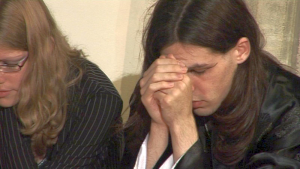
Steven Croft reflects on helping others to pray.
 One of the major public themes of 2007 was prayer. As I watched the news I was moved again and again by a rising tide of prayer vigils and special events around major crises and tragedies. The word prayer was on the lips of politicians, public figures and celebrities more often than I can remember. Themes of faith and hope intertwine in the single released by X Factor winner Leon Jackson. ‘When You Believe’, currently at the top of the UK singles chart.
In November, Tear Fund released the results of a major survey to mark Global Poverty Week: ‘Prayer in the UK: Be part of a miracle’. They discovered that 20 million adults in the UK pray regularly. All of them find it helpful. At least half believe that prayer makes a difference in their lives, in the lives of their families and friends and in the life of the world: prayer changes things. Encouraging people to pray as part of their response to global poverty strikes a chord.
A large number of different research strands now demonstrate that Britain is becoming a more spiritual place again. A growing section of our population is more open to experience of God; more open to prayer. That trend has been building for a number of years and probably has some way still to go. The ministry of spiritual directors is in great demand from those who are not regular churchgoers as well as those who are. Retreat centres and religious communities are attracting a growing number of visitors. This search for spiritual experience and connection showed itself again over Christmas in attendance at church and cathedral services.
 Mission is finding out what God is doing and joining in. So if part of what God is doing is stirring people to pray, how can we as a church look to join in what God is doing and support this vast number of people in their prayers?
First, I think we need to recognise honestly that many of us within the church are starting a long way back in this respect. Our services are no longer recognised by many as places of spiritual depth and encounter with God. John Drane has argued for some years that we have become a ‘secular’ church in a ‘spiritual’ society. In many churches of all traditions there may be little expectation of encountering God through public worship, in the ministry of the word or in any other way. We need to clear away the clutter at the start of a new year, not just in the space we use for worship (though that is important), but in our liturgy and songs, and especially in our notices. Silence and space to be open to God and respond to God’s grace will be vital. Whether our meeting place is an ancient chapel, a school hall or a café, will those who gather find a sense of reverence and of God’s presence in our midst?
Second, we need I think to work on creating particular times and spaces and symbolic actions to help people to pray. Discovering these will only come about through listening to what people find helpful and a sense of experiment. These opportunities to pray seem to work best when they are offered in a way which is open and available to people to join in as they feel is right. However, it is also important to provide help and support in terms of the words and actions used. We are too used, I think, to the idea that prayer together is about sitting or kneeling in a pew with head bowed and eyes closed while someone at the front reads prepared intercessions.
Many established congregations and fresh expressions of church are now experimenting with prayer stations: different points in a building where people can come and pray in a range of ways which engage the senses. These stations have been traditionally part of cathedrals and churches in a more catholic tradition for many years and are a very good example of the ancient-future dynamic at work in fresh expressions of church. For all or part of the service, the congregation move around these different stations and engage with them in prayers of confession or intercession or silent reflection. There may be at each station a symbolic action such as lighting a candle, placing a stone on a cairn or making the sign of the cross with water. There may be the opportunity for laying on of hands or anointing for healing and grace.
 Moving to the prayer station and engaging in these simple actions or using the words provided engages people in prayer and offers them words and actions which articulate in a deep way the spiritual longing inside them. Shaping these prayer stations draws out new gifts of creativity in those who develop them. Sometimes they can be permanent and occupy a corner of the church for a season for all who come in and use the building. Sometimes they are just for one moment or occasion. They can be helpful in ordinary times of thanksgiving and intercession but also immensely powerful in a time of shared grief, intercession or tragedy.
One of the most memorable acts of worship I shared in 2007 was at the Portsmouth Diocesan Conference where a fresh expression of church called the Friday Fridge led the conference in Compline entirely through the use of prayer stations and static displays. Every part of the order of service was used. The act of worship was profoundly engaging. Some people moved around in silence. Others talked to each other as they explored the different parts of the service. Many different gifts were used in preparing the worship. For me, a traditional liturgy I have always loved was given new depth and meaning.
Make it one of your resolutions for 2008 to find out how people outside your church community say their prayers and how you can help and support them in their journey.

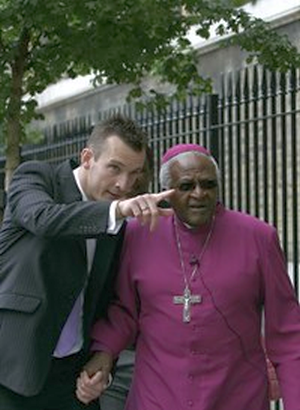
 I hope this post will be an interesting thought from my perspective as CEO of a church organisation. Church Army is at the forefront of the fresh expressions agenda and our people all over the UK and Ireland are establishing fresh expressions of church, seeking to connect the transforming good news of Christ with those who would otherwise never enter a church. You can view some short films of them doing this. I love seeing how God is releasing his people to pioneer new things to help people to come to faith through creative new Christian communities.
 I think the church over the next few years is going to hear the word of the Lord through the credit crunch. A former diocesan secretary in Canterbury used to say:
 Rowan Williams, Archbishop of Canterbury, asks 'Is it really church?'
 The remainder of this article can be found in the debut issue of mixed economy, a new journal from Fresh Expressions, which is available free of charge from the
 Jonny writes: 'i sometimes get asked about the relationship between fresh expressions and emerging church. it's all part of the wider change in response to mission in postmodern cultures. fresh expressions is the anglican/methodist initiative. emerging church was the name given to the earlier experiments at the edges that was not denominational that inspired the c of e to write mission shaped church. the edges are blurred and it's not really that important. i know of very few other mainline denominations around the world that have been so prepared to pave the way for newness in response to the changing mission context. it's very encouraging.'
 The '
The '
 A thread running through many fresh expressions is God's call to take risks – to step out of comfort zones. Maybe the Spirit doesn't want us to become too settled or reliant on our own way of doing mission and being church.
 Have you ever wondered if the thoughts you have about helping God build his church are actually from him? I mean, how do we know that our idea is part of God's way ahead and will bear fruit that will last?
 This very nearly happened to me at a meeting of fresh expressions practitioners a few weeks ago. One of the buzz words was 'radical' and I heard it so often, from so many people, that I started to wonder what it meant.
 But just as God said, 'It is not good for man to be alone', it might also be true to say that 'It is not good for evangelists to be alone'. Indeed, there is a page on Share about this very subject:
  I know of a group of Christians in Sheffield who meet each week in a pub for Bible study and prayer. They could have booked a function room, but instead they meet round a table in the main drinking area in full view of everyone. Over the months and years, this has led to trust and respect from the regulars, and lots of conversations.